
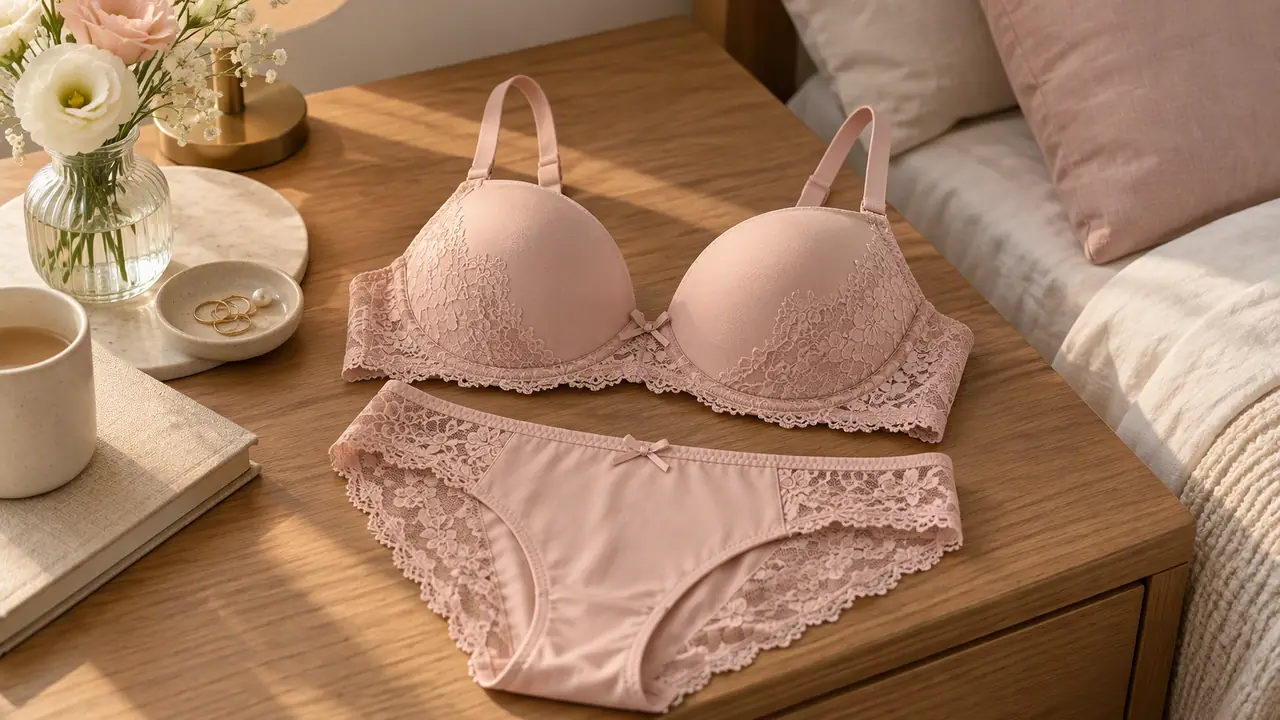
Why construction vocabulary belongs in the buying conversation
Buyers who can name a bra's parts get better answers from plants than buyers who can only describe symptoms. A note that says the band relaxes after washing opens a different conversation from one that says the wing elastic lost recovery, and the difference shows up in how fast a sample loop closes. Construction vocabulary also protects a program across repeats: when every component has a name and a specification line in the tech pack, a second order is checked against the same document the first order was built from, not against a memory of a sample.
The vocabulary matters for plant selection too. Wired styles with a cradle and channel sit on a different capability stack than wireless styles or bralettes, and molded-cup programs sit on yet another one, because molding is a separate department with its own tooling. The desk shortlists partner plants by style family first, then checks the component list line by line; this note is the checklist that conversation starts from.
Band and wings: the anchor of the garment
The band is the part that anchors the bra around the torso, and it is built from three decisions that travel together: the band fabric, the band elastic and the wing depth. The band fabric is often a stabilized wing panel - powermesh or a comparable compression knit on fuller sizes - and the band elastic runs along the lower edge as a plush-backed strip selected for recovery rather than for maximum stretch. Wing depth is a pattern decision that scales with cup load: deeper wings spread anchoring force at lower pressure, which is why plants that grade well step the wing construction up at defined breakpoints instead of running one shallow pattern across the ladder.
The band fails more often than any other component in consumer reviews, usually through elastic fatigue rather than through fabric failure. That is why band elastic is verified with a stretch-recovery result on bulk production yardage, not on sample yardage, and why the laundering conditions of the wear test are matched to the printed care cycle. The elastic families and their differences are covered in elastic types.
Cups, cradle and gore
Three parts make up the front frame. The cups carry the profile of the garment: they can be cut-and-sewn panels, single-piece molded shells or lined lace, and each route calls for a different plant department. The cradle is the stabilized frame that surrounds the lower cup and holds the wire channel; it is cut from low-stretch fabric so the geometry of the wire path stays fixed while the cup above it flexes. The gore - also called the bridge or center panel - is the small panel between the cups that sits against the sternum. Whether the gore tacks flat is one of the first things a fit session reads, because a floating gore usually points at a cup volume or wire-length decision rather than at the gore itself.
On wireless styles and bralettes the cradle and channel drop out and the frame simplifies, but the naming discipline stays: the parts that remain still need their own lines in the tech pack, because a wireless program has fewer parts and therefore less room to hide a substitution.
The underwire channel and the wire
The channel is the casing tape sewn along the cradle that holds the underwire, and it is specified by width, construction and stitching method. The wire inside it is a spring: its length, gauge and tip style are chosen per size in the ladder, which is why wire programs are planned as a set of lengths rather than as one part. Channel stitching matters because a wire that escapes through a worn seam is the single most expensive construction failure a bra program ships; the note on underwire types and sizing walks through wire families, length runs and channel specification in detail.
Straps, closures and findings
Straps carry vertical load from the cup edge over the shoulder, and they are built from strap elastic with a plush back, hardware and two attachment decisions - how the strap meets the cup at the front and how it meets the back wing. Attachment style decides whether the strap is adjustable and whether it detaches, which matters most on strapless and convertible builds where the hardware has to hold without a strap doing any of the work. The construction detail sits in strap construction.
The closure at the center back is a hook-and-eye set: a hook tape and an eye tape, in a gauge and row count chosen against band depth and cup load. Findings - rings, sliders, tips and the closure itself - are small parts with a large failure surface, and they are typically planned per thousand pieces with quantities confirmed in writing. Row counts and gauges are laid out in hook and eye closures.
The component map at a glance
| Component | Structural job | Specification points buyers fix |
|---|---|---|
| Band and wings | Anchors the garment around the torso | Wing fabric, band elastic grade, depth per size breakpoint |
| Cup panels | Carry the profile and coverage | Molded vs cut-and-sew, lining, stitch method per seam |
| Cradle | Stabilized frame holding the wire path | Low-stretch fabric, grain, channel alignment |
| Gore | Bridge between the cups at the center front | Height, width, wire-channel start position |
| Underwire channel | Casing that retains the wire | Tape width, construction, stitch class, closure at both ends |
| Straps | Vertical load path over the shoulder | Elastic grade, width, front and back attachment, hardware |
| Hook and eye | Adjustable closure at the center back | Gauge, row count per size, tape coverage, attachment |
| Ring and slider | Adjustability and strap routing | Material, bar width, attachment stitching |
| Elastics and trims | Edge hold at neck, underarm and decollete | Type per edge, stretch and recovery figures, picot or clean finish |
| Labels and tags | Legal and care information | Method, placement, print durability per care cycle |
The table is deliberately spare: each row is a conversation with a plant, and each specification point is a line in the tech pack. Padding adds a further layer on padded builds - foam shells, removable pads or graduated inserts - and the options are set out in padding types.
How the desk reviews a construction sample
A construction review is a line-by-line pass against the tech pack, run after the sample has been washed, because finishing can move seams, elastics and lamination:
- Confirm the bill of materials names every component per panel, not as a single fabric line.
- Check each seam against the specified stitch class and stitch density.
- Verify findings - closure, rings, sliders, tips - against the confirmed components, not lookalikes.
- Wash the sample through the printed care cycle, then re-check channel ends, attachment points and elastic recovery.
- Keep a signed sample and the agreed BOM in the program file so repeats are checked against the same baseline.
The same sequence runs at the smallest and largest sizes of the ladder, because components are graded too: a wing, a channel or a closure that holds at the center size can fail at the ends of the range.
Where the desk fits in
The desk coordinates partner plants by style family - wired, wireless, molded, seamless - and keeps component specifications and signed samples in the program file so repeat orders start from documents rather than from recollection. Reference quantities for bra programs are typically 1,000-3,000 pieces per color for branded work and 500-1,000 for catalog models, with samples in 7-15 days for catalog builds and 15-25 days for branded samples; every figure is a reference range confirmed in writing per order, and the current table sits on MOQ and lead time. To open a program with the component list already named, the quote form carries the ladder, the construction route and the fit history, and plants respond to a brief they can price line by line.