
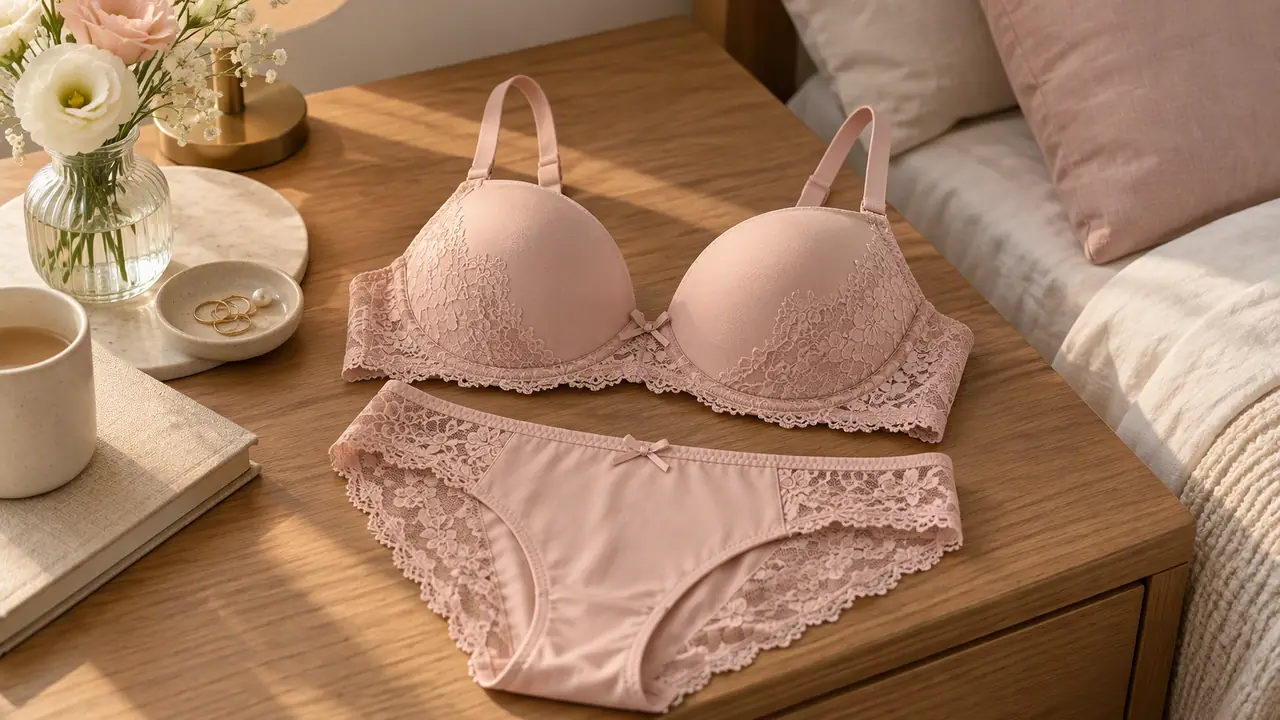
What straps actually do
A strap is a load path: it carries part of the garment's work from the cup edge over the shoulder to the back wing, and its construction decides how that load is delivered - as a steady, distributed pull or as a narrow pressure line the wearer notices within the hour. Straps are also the most handled part of a bra: adjusted in the morning, re-adjusted through the day, machine washed with the hardware attached. That combination - real load, constant handling, visible failure - makes strap construction worth specifying at the same resolution as the band, and worth checking on washed samples rather than on the fitting table alone.
Because straps are graded, the sample review runs at the ladder ends. A strap set that reads correct at the center size can be under-width at the top of the range, where the load is highest, and over-firm at the bottom, where it turns a light build into a rigid one. Sampling both ends costs one extra fit session; discovering the same facts in reviews costs a size run's reputation and a rework cycle.
Width and grade against cup load
Strap width scales with the load it carries. Narrower straps read lighter and suit smaller cup builds; wider straps spread the same load over more shoulder at lower pressure, which is why programs step the width up at defined cup breakpoints rather than running one width across the ladder. Width decisions pair with elastic grade: at fuller builds the strap is specified firmer so it transmits load instead of absorbing it, and the two decisions are written together per size breakpoint in the tech pack. A ladder that widens the wing and the closure at the fuller end but leaves the strap unchanged has not finished the grading job.
Strap elastic: plush back and recovery
Most straps are elastic, and the same recovery logic that rules band elastic rules here: the figure that matters is how completely the strap returns after being stretched, because a strap that lengthens permanently converts the fit day by day until the band takes load it was not built for. Plush-back finishing - a soft brushed face against the shoulder - is the comfort convention on skin-facing straps, and its durability through laundering is a specified property, not an assumption. The elastic families and the figures that belong on a strap specification are set out in elastic types.
Front and back attachment
Two attachment decisions shape what a strap can do. At the front, the strap either runs fixed into the cup seam - the lower-profile, non-adjustable read common on smaller sizes and fashion builds - or joins through hardware that allows adjustment. At the back, the strap meets the wing through a ring and slider, the standard adjustable arrangement, or is fixed on builds where adjustability is traded for a cleaner back. Convertible and detachable builds add a third layer: hardware that lets the strap leave the garment entirely, which is the defining construction of the strapless program - the strapless bra page covers what the band must hold without them, with silicone grips and structure doing the work straps would otherwise share.
Hardware: rings, sliders and converters
The hardware is small and unforgiving. Ring and slider sets are specified by bar width matched to the strap width - a slider that rattles on its bar loses adjustment in wear - and by material and finish chosen for laundering and skin contact. Converters, the clips that redirect straps for racerback wear, add a load-path change that the strap elastic must tolerate. Hardware attachment is stitched, and the reinforcement at those points is a named line in the stitch plan, because attachment points concentrate load more than any other seam on the garment. Findings are typically planned per thousand pieces with quantities confirmed in writing per order.
Strap builds at a glance
| Build | Construction | Typical placement | Watch-outs |
|---|---|---|---|
| Fixed strap | Set into the cup seam, non-adjustable | Smaller sizes, fashion builds | Length tolerance across the ladder |
| Fully adjustable | Ring and slider at the back | Everyday programs | Slider fit on the bar; adjustment hold in wear |
| Convertibly attached | Detachable hardware, re-routable paths | Convertible and multiway builds | Hardware strength; strap elastic under re-routed load |
| Strapless-ready | Removable straps, band carries the work | Strapless programs | Attachment points finished for hardware removal |
| Decorative strap | Lace or trim face over an elastic core | Fashion and bralette builds | The decorative layer must not carry structural load |
Failure modes: digging, slipping and drift
Three failures reach reviews. Digging - pressure concentrated at the shoulder - is usually a width-and-grade decision made at the wrong end of the ladder, and its causes and fixes are set out in straps digging. Slipping off the shoulder is a geometry question: strap angle and back placement are pattern decisions, and no hardware fixes a strap that starts in the wrong place. Drift - the strap that needs re-tightening through the day - points at elastic recovery or slider hold, both verifiable on washed samples. Each failure has a specification answer, and none is expensive to exclude at the tech pack stage.
What buyers should specify
Five lines cover the strap system: width per size breakpoint, elastic grade with recovery figures, plush-back finishing, the attachment arrangement at front and back, and hardware specification with reinforcement points named in the stitch plan. For convertible builds, add a hardware load check. The strap is also the component wearers handle most, so its specification ages in public: the figures that pass on a washed sample are the ones that decide whether reviews mention the strap at all.
Where the desk fits in
The desk puts strap specifications in front of partner plants with the size grid, because strap grading is part of ladder grading and is easiest to fix at the pattern stage. Reference quantities for bra programs run typically 1,000-3,000 pieces per color for branded work and 500-1,000 for catalog models, with hardware and findings planned per thousand pieces - reference ranges confirmed in writing per order, with the current table on MOQ and lead time. The quote form carries the ladder and strap plan so plants quote findings with the garment rather than after it.