
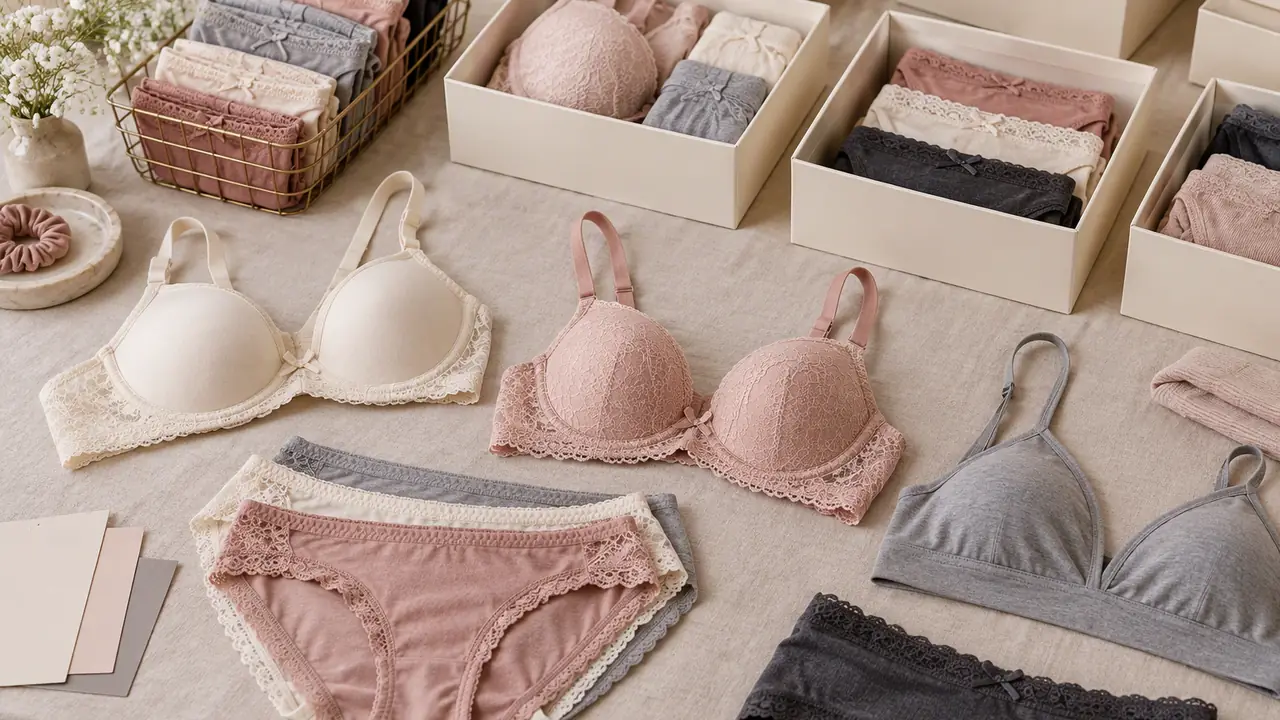
OEM and ODM: two routes, two kinds of homework
In intimate apparel the words describe who owns the engineering. On an OEM program the plant builds to your specification: your spec sheet or the one this desk writes with you, your color card, your logo, your packaging. On an ODM program the plant starts from a base style it already engineers and adapts it - your color and your logo on a construction the plant owns. Neither route is better; they trade control against calendar. OEM gives you a construction nobody else carries and asks you to approve every variable. ODM shortens the road to a first shipment and asks you to accept a construction you did not draw.
The desk runs both. For a first program it usually suggests an OEM build on a proven base block: the plant's existing construction, your fabrics from a shortlist, your colors and your brand layers. That keeps fit risk low while everything a customer sees carries the brand. A full ODM development, where the construction itself is new, runs 60-90 days to a first order before reorders settle into a rhythm, and it makes sense once a line is selling.
Where the brand appears
Branding in this category is layered, and each layer is specified separately:
- Woven or printed logo. A bow label at the center gore, a woven band label, or a tagless heat transfer inside the garment.
- Jacquard logo elastic. The logo repeated along the band or waistband; it needs a minimum run and its own color standard.
- Color card. The palette every lot is judged against; one card across bras and panties keeps a range looking like a range.
- Packaging. Tissue wrap, box, hangtag and carton marks; the formats are set out on the packaging page.
Each layer lands on the spec sheet with an approved reference, so the plant is never guessing what the logo should look like or which color is the color.
Sample stages, from catalog model to sealed sample
Sampling is where an OEM program is won or lost. The desk books the stages below and files the reference each one produces.
| Stage | What it is | Typical window |
|---|---|---|
| Catalog sample | An existing style sent as-is, to judge construction and fabric | 7-15 days |
| Branded sample | Your color, logo and trims on the agreed base | 15-25 days |
| Custom print or lace | New placement print or an engineered lace repeat | 20-35 days |
| Pre-production sample | Final fabric and trims from the batch line | Before the batch starts |
| Sealed sample | The signed reference inspection compares against | At approval |
Windows are typical across the category and are restated per program on the MOQ and lead time page. One comment round resolves one group of variables; a sample sent back with five unrelated changes answers none of them cleanly.
MOQ and lead time by line
| Program | Typical MOQ | Typical batch lead |
|---|---|---|
| Bra on a catalog base | 500-1,000 pcs per color | 30-45 days |
| Bra, private label | 1,000-3,000 pcs per color | 35-50 days |
| Panties, all styles | 2,000-5,000 pcs per color | 35-50 days |
| Period panties | 1,000-2,000 pcs | 35-50 days |
| ODM first order | Per program | 60-90 days |
Lace is referenced from 500-1,000 meters and trims by the thousand pieces. Every figure here is a reference range, never a quotation; the number that governs your program is the one the desk confirms in writing for it.
What the desk confirms in writing
A program is transferable only if its documents are. Before a batch starts, the desk closes these items with the plant:
- The spec sheet per style: materials, measurements, tolerances, construction.
- The color standard and the retained swatch kept for lot comparison.
- Label files: fiber content under the Textile Fiber Products Identification Act, care wording under the FTC Care Labeling Rule, and RN or equivalent registration where the market asks.
- The packaging dieline and the carton marks.
- The inspection plan and the certificate route: OEKO-TEX Standard 100 held by the partner plant per lot and verified per project; the route per market is on the compliance page.
Mistakes that cost a month
- Ordering boxes before the folded garment dimensions are final, then reprinting.
- Approving a color under office lighting only, without the lamp check against the retained swatch.
- Letting each style carry its own label logic, so the range ships with mixed legal wording.
- Skipping the pre-production sample to save days, then meeting the variation in the batch.
Brief the desk
Useful brief content: styles, size runs, color ladder, branding level (logo only, logo plus jacquard elastic, or full pack), intended market and channel, and any certificate the channel asks to see. Send it through the quote form and the desk returns a shortlist, a sample route and the ranges that apply. The sourcing process page shows the ten steps from brief to after-sales, the OEM and private label guide goes deeper on the paperwork, and private label intimates covers the route from logo to package.