
Why this category carries MOQs
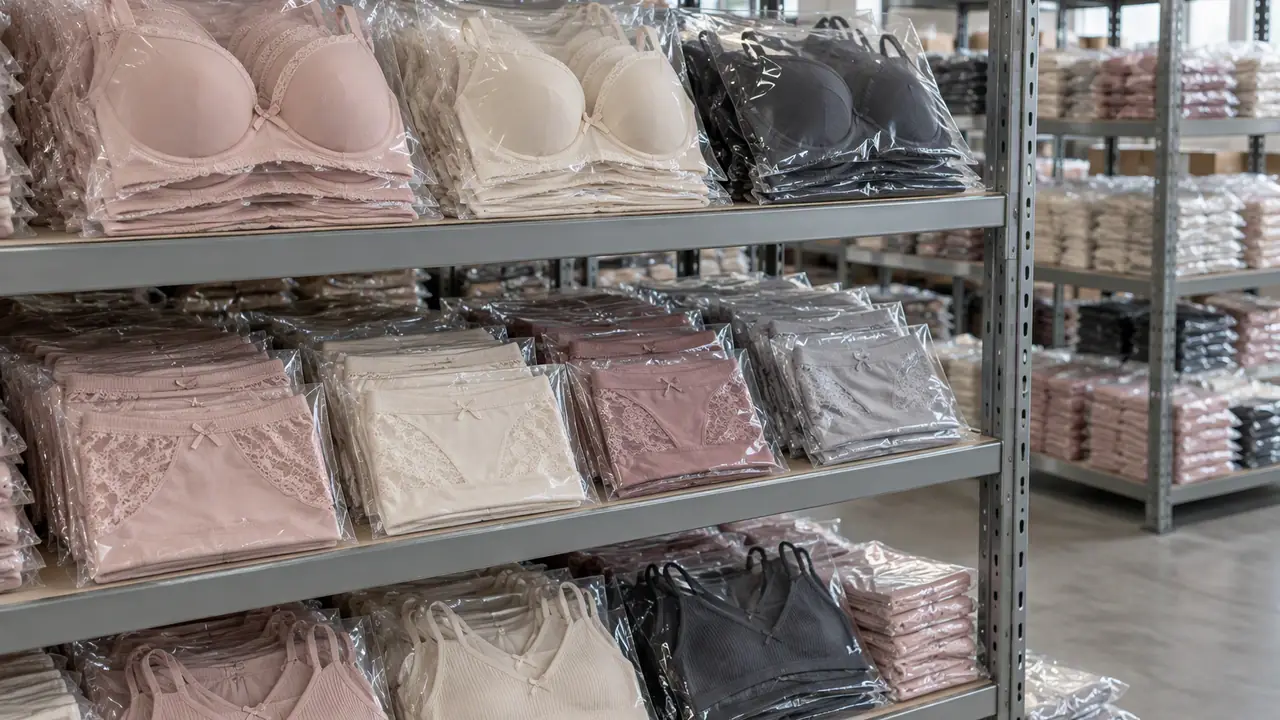
Minimum order quantities in intimate apparel are set by the trades that make a garment look finished, not by the sewing line. A bra carries dyed-to-match elastics, hooks, sliders and thread; a panty carries waistband elastic and lace. Dye houses run batches by kilo, lace mills run by meter, and those minimums spread across the pieces in a color. That is why MOQ is quoted per color rather than per style: the color is what forces the runs, and each color in a range carries its own.
It also explains the shape of the ranges below. A catalog base style inherits components the plant already runs, so its entry point sits lower. A private label build specifies elastics, labels and packaging against your brand, and each of those carries a minimum, so the entry point rises. Neither figure is negotiable by charm; both move with the technical choices a program makes.
Reference ranges by line
| Program | Typical MOQ | Typical batch lead |
|---|---|---|
| Bra on a catalog base style | 500-1,000 pcs per color | 30-45 days |
| Bra, private label build | 1,000-3,000 pcs per color | 35-50 days |
| Panties: brief, bikini, boyshorts, thong | 2,000-5,000 pcs per color | 35-50 days |
| Period panties | 1,000-2,000 pcs | 35-50 days |
| Lace fabric | 500-1,000 meters | Follows the batch schedule |
| Trims and hardware | By the thousand pieces | Follows the batch schedule |
| ODM first order | Per program | 60-90 days |
These are reference ranges typical across the category. They are not quotations and they are not promises; the number that governs a program is the one confirmed in writing for that program, on that fabric, in that color depth. Dark, saturated colors and engineered lace sit at the higher end of a range; a proven catalog base in a stock fabric sits at the lower end.
Sample windows
Samples run 7-15 days for a catalog model sent as-is, 15-25 days for a branded sample with your color, logo and trims, and 20-35 days when a custom print or an engineered lace repeat has to be struck. The windows count working days from confirmed comments, which is why the desk keeps comment rounds to one variable group at a time: a sample sent back chasing five unrelated changes answers none of them cleanly, and the calendar pays for the confusion. The sourcing process page shows where sampling sits in the ten steps and what closes each round.
Batch production windows
Batch lead runs 30-45 days on a catalog base and 35-50 days on a private label build, counted from fabric and trim readiness on the floor, not from the purchase order date. An ODM first order, where the construction is developed as well as produced, runs 60-90 days before the reorder rhythm takes over. These windows stack with transit rather than including it: production ends at packed, checked cartons, and the logistics page picks the calendar up from there with ocean, express and air options. Refills repeat inside the batch window without the sample stages, provided nothing in the spec or the color card has moved; that is the quiet argument for freezing documents at approval.
What moves a range up or down
- Color depth. Deep dyes need longer fixation and larger bath minimums; pale colors move faster and cheaper.
- Fabric availability. A stock microfiber starts immediately; a custom jacquard waits for the warp to be dressed.
- Size ratio. A wide size run packs more pieces per color but grades more patterns; a narrow run does the opposite.
- Trims. Logo elastics and custom hardware carry their own minimums and sit on the critical path.
- Season. Cluster capacity tightens around regional holidays; calendars are planned around them rather than surprised by them.
Ranges are references; the sheet is the number
Use the ranges on this page to size a first buy and to sanity-check a plan. When a program goes live, the desk restates the applicable numbers - pieces per color, sample days, batch days - in the program sheet and confirms them in writing before anything is booked. If a figure you are working from sits outside these ranges, ask why; it usually means a fabric, trim or color choice is steering the program, and it is better to see that at the brief than at the batch. The OEM and private label page explains how those choices are specified, and the quote form collects what a plant will ask. For the ranges in use, see illustrative case studies and intimates OEM and MOQ explained.