
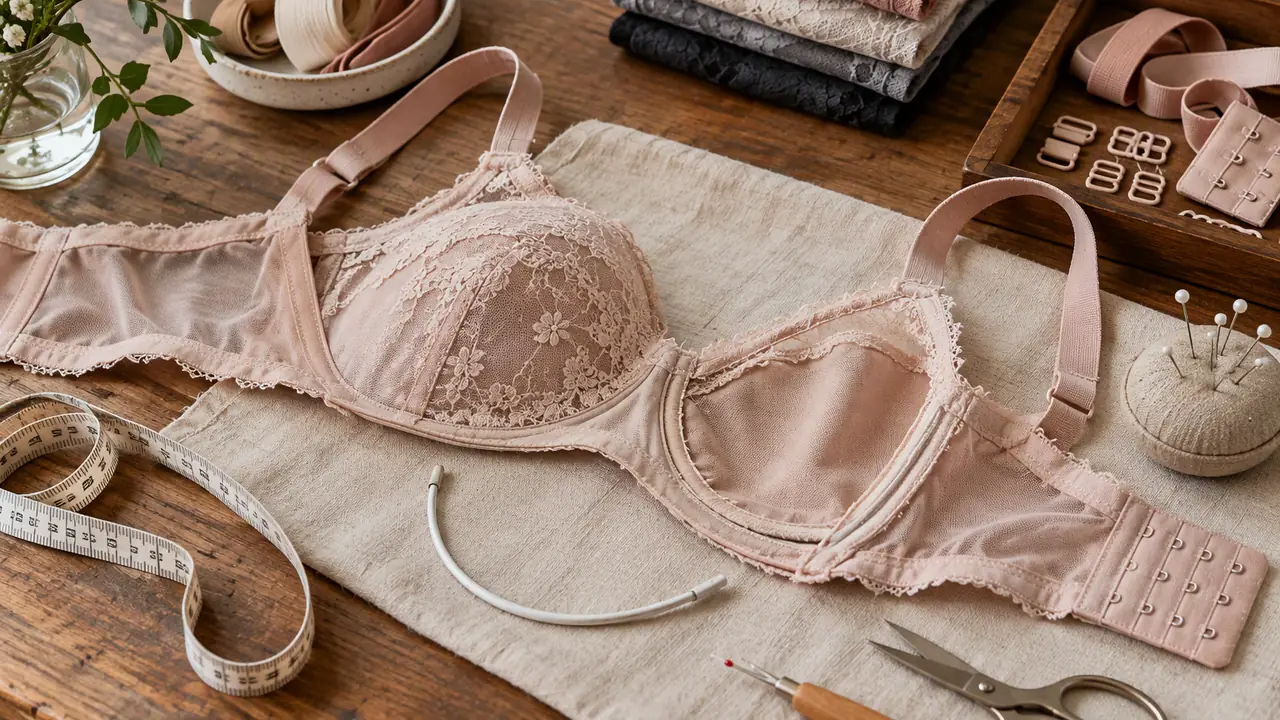
What ends a bra's working life
A bra is a small assembly of components under daily load, and each has a distinct wear mode. The band elastic loses recovery - the property that lets it anchor - and the first symptom is ride-up under movement, long before the garment looks tired. The underwire either stays captured or begins to press where its curvature disagrees with the cup, a build-quality question covered in the note on underwire poking through. Cups relax: molded foam softens and seamed panels stretch at the seams, and the profile the size chart promised quietly changes. Closures wear at the hooks and the stitching that holds them. Straps set and fray at the edges. The garment is finished when the component the fit depends on gives out - almost always the band, which is why band care is the center of every lifespan conversation.
Reading wear by component is also the diagnostic value here. A complaint that the bra has died usually means one component died, and the component list tells a fit team whether the answer is care guidance, a construction change or a refit. The note on elastic losing stretch follows the band story in detail; this note keeps the whole assembly in view.
Rotation beats calendar time
The question under every lifespan discussion is a number - how many months should a bra last. The honest answer is that wear-and-wash cycles set the clock, not the calendar. A bra worn once a week and dried flat lives many times longer, on the calendar, than the same bra worn daily and machine dried, and no single month figure can cover both behaviors. Rotation is the practical answer: a set of pieces worn in turn gives each band a recovery day, which slows exactly the elastic fatigue that ends the garment. Consumers who own two or three everyday bras in rotation replace each of them less often than a wearer who owns one and wears it out in continuous service.
For brands this reframes the content opportunity. Listings and after-sales material that teach rotation and care do three jobs at once: they set honest expectations without promising durations, they reduce the complaint stream that reads as premature wear, and they open a natural re-purchase conversation - a replacement cycle the brand helped plan is a re-purchase the brand hears about first. The note on after-sales planning covers that program side.
Care practice that extends life
Care habits sort into a short list with an outsized effect. Lukewarm washing instead of hot protects elastic yarns; a mesh bag keeps hooks and hardware from abrading the fabric; skipping the machine dryer is the single largest favor anyone does a band, since heat permanently relaxes elastic. Storage matters too - bands folded under pressure or straps hooked over a door take a set without ever being worn. None of this is exotic, and all of it belongs on the care label in a form the garment can survive: for the United States market the FTC Care Labeling Rule requires a care method the product can endure, and the note on care labeling rules covers the requirements. The label that matches the tested method is the same discipline the program enforced in production, extended to the wearer.
| Component | Wear signal | What it costs in fit | Response |
|---|---|---|---|
| Band elastic | Ride-up under movement; creases at rest; tightest hook in daily use | Anchoring lost; the whole fit drifts | Replace; teach rotation and cool-wash care |
| Underwire | Tip pressing at the channel ends; casing wear | Comfort fails before fit does | Replace; check wire-to-cup matching upstream |
| Cups | Foam softening; wrinkled or stretched edges | Profile changes; gapping appears | Replace; molding quality is the upstream lever |
| Closures | Hooks slip rows; stitching pulls loose | Band runs loose at every setting | Replace; hardware gauge per size upstream |
| Straps | Permanent set; edges fray; hardware deforms | Load share shifts; band overworks | Replace; elastic and hardware spec upstream |
The fit-drift trap
Bodies change and garments wear, and both present as my bra stopped fitting. Sorting them matters because the answers differ: a body change asks for a refit and a new size, while component wear asks for replacement and better care. The quick test is comparison - the same size in a newer piece versus the tired one. If the new piece fits, the old one wore out; if neither fits, the size has moved, and the note on signs of a good fit provides the check sequence. Consumer demand data suggests how much this confusion costs: Semrush keyword data puts the phrase bra size calculator at roughly 74,000 US searches per month, a volume built on wearers re-deriving their size because their current pieces no longer read as fitting. After-sales content that walks the new-versus-tired test converts that confusion into a constructive conversation instead of a return.
After-sales content for brands
Lifespan content is where quality messaging and returns management meet. The pieces that earn their place in a brand's material are short and specific: a rotation explainer, a care list matched to the label, a component-by-component replacement guide and the fit-drift test. Each answers a question wearers actually ask, in the pattern the note on listing content describes, and each reduces the return reasons catalogued in the note on reducing returns. Brands that skip this content pay for the same education in refunds and reviews, one complaint at a time.
The upstream half of lifespan is decided before the first wear, and it is the buyer's half: elastic grade and recovery testing, wire-to-cup matching, closure hardware and the inspection points that hold them, covered in the construction and inspection notes throughout this group. Reference program figures across the category run: catalog-model samples in 7-15 days, branded samples in 15-25 days, bulk in 30-45 days for catalog models and 35-50 days for branded programs, confirmed in writing per order with quantities on MOQ and lead time. The desk assembles the care and lifespan content alongside the program through the quote form, so the story the garment ships with matches the standards it was built to.