
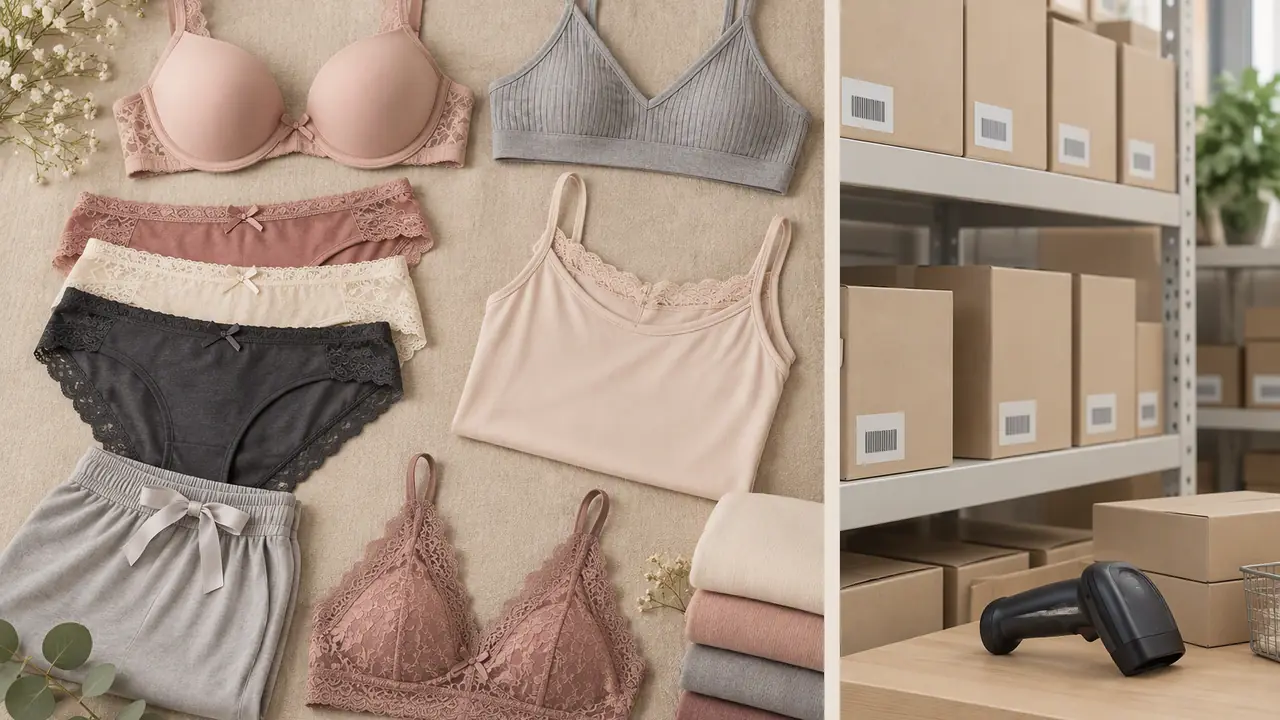
The compliance blocks every listing carries
In the United States, three label rules shape what an intimates listing states. The Textile Fiber Products Identification Act requires fiber content, country of origin and the manufacturer or dealer identification - the RN number - on textile products, and the listing must not contradict the label sewn into the garment. The FTC Care Labeling Rule requires care instructions, so wash and dry guidance in the listing should mirror the care label. The flammability standard 16 CFR 1610 applies to fabrics in general wearing apparel, and children items pull CPSIA into scope as well. None of these rules mention listings, but a listing that invents a fabric blend or omits care guidance creates a paper trail that disagrees with the garment, and that disagreement is what reviewers and customs brokers notice. The desk derives the label artwork and the listing copy from the same specification, and the compliance notes on fiber labeling and care labeling carry the detail.
Size content that answers the fit question
Fit is the question every intimates buyer has, and search data shows how loud it is: Semrush data reviewed by the desk puts bra size calculator queries at about 74,000 US searches per month, alongside roughly 90,500 for bra and 49,500 for panties. Buyers go looking for fit help before they go looking for products, and a listing that answers the fit question keeps them. The workable block is short: a graded size chart in the units the market uses, a sister-size line for bra shoppers, a three-step measuring note, and a coverage statement in construction terms - how high the cup rises, how full the rear coverage runs on a panty style. The sizing and fit guide supplies the reference detail, and the notes on size charts and sister sizes and measuring band and cup are written to be linked from a listing.
A content block that scales across SKUs
Marketplace sellers run many styles at once, and the listings stay consistent only if the content blocks are defined once and filled per style. The desk uses this shape:
| Block | Question it answers | Source document |
|---|---|---|
| Fiber and origin | What is it made of, and where from | Label artwork, commercial invoice |
| Care | How to wash, dry and store | Care label specification |
| Fit | Will it fit, and how does it compare | Graded size chart, fit notes |
| Construction | What is inside the style | Spec sheet: wires, padding, lining, closures |
| Certification | What is tested, on which lot | OEKO-TEX Standard 100 certificate per lot |
Five blocks, filled from documents rather than from memory, keep forty listings as consistent as four. They also make buyer questions fast to answer, because the reply already exists in the block source, and they make catalog audits a formality instead of an archaeology project.
The blocks earn their keep after launch, too. Buyer questions and review themes map cleanly onto them: sizing complaints point at the fit block, wear-life complaints at the construction block, and expectation complaints at the imagery. A seller who logs questions against blocks for one season knows exactly which listing sections to rewrite and which production lines to tighten. The desk closes the loop on the production side: recurring fit or quality themes in reviews become checklist items at the next pre-shipment inspection, which is how listing content and quality control end up reading from the same page.
Imagery without models
Intimates imagery does not need models to sell, and on the programs the desk runs, flat lays and fabric close-ups are the standard. A clean flat lay shows silhouette and trim. A macro shot shows lace pattern, knit texture or elastic quality. A folded view beside a size graphic gives scale, and a reverse view shows closures and lining. Consistent lighting and background across styles make a forty-SKU catalog read as one brand rather than a collection of finds. Alt text should describe the garment and the view, with the main keyword once, because search engines and screen readers both read it. Model-free imagery also avoids a subtle expectation trap: a photo on a body invites the buyer to compare bodies, which is a comparison a size chart settles far better. As a practical note, one shooting day per collection is usually enough if the shot list is written against the content blocks above - every image then has a named job, and nothing is shot twice.
Claims wording that survives review
The wording rule is structural facts only. A four-way stretch body, removable pads, a wireless design, a cotton gusset lining - all are verifiable construction statements, and they are enough to describe any style in the category. Copy that promises changes to the body, or support effects beyond construction, is where listings get pulled, and the desk keeps such wording out of programs entirely. Certification wording follows the document: OEKO-TEX Standard 100 is cited as tested per certificate per lot, never as a general promise about a brand. Absolutes have no place in the copy either - wording that promises the absence of substances cannot be substantiated and reads that way to a trained reviewer. The claims file behind the copy is covered in the note on substantiated sustainability claims.
A listing build sequence
- Pull the fiber, origin and care lines from the label artwork, so listing and garment never disagree.
- Build the graded size chart from the production specification, not from a generic chart, and add sister sizes for bras.
- Write the construction block from the spec sheet: wires or wireless, padding type, lining, closures.
- Shoot flat lays and close-ups in one lighting setup, and write alt text per image.
- Cite certifications by document - per certificate per lot - and keep the file behind every claim.
- Hand the packed brief to the desk on the quote form so samples match the listing from the start.