
Why capacity gathers in clusters
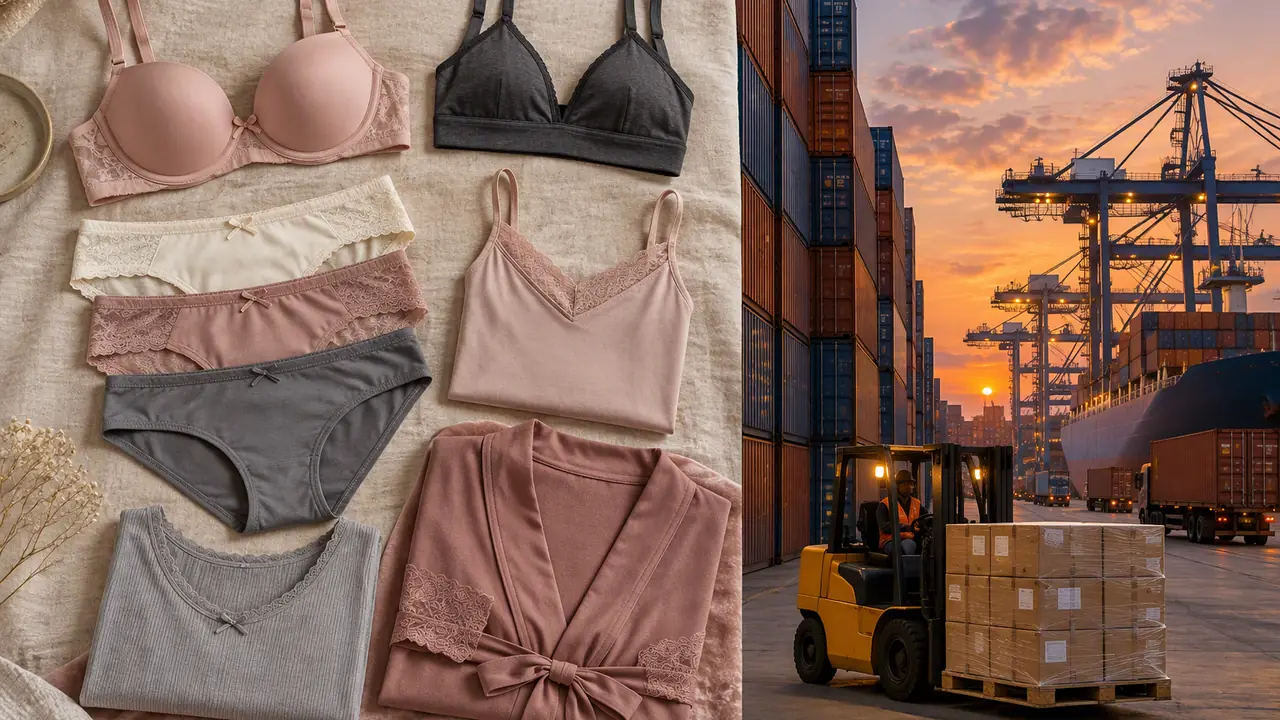
Ask where intimate apparel is made in China and the practical answer is a map with four shaded regions rather than a list of factories. Bra plants, panty workshops, lace mills, elastic weavers, dye houses and cup mold makers sit within a few hours of each other across Guangdong and Zhejiang, and that density is the real product of the clusters. An intimates program is a chain of specialized steps - fabric development, dyeing and finishing, cup molding, cutting, sewing, finishing, inspection - and a missing link anywhere in the chain surfaces as delay or as a substitution nobody approved. Inside a cluster the missing link is usually a short drive away. Outside one, it is a freight shipment and a week of calendar.
The desk treats the cluster map as the first filter in every shortlist. The broad process sits in the note on sourcing intimates from China and the standing comparison on the industry clusters page; this note goes one level deeper into what each region actually does, and how a buyer matches a program to it.
The four regions at a glance
Four regions carry most of the export capacity a foreign buyer will touch. Two of them publish figures that survive citation: industry press counts 2,000-2,100 intimate apparel enterprises across Shantou's Chenlian and Gurao towns, and Puning's municipal government reports 2025 textile and apparel output above RMB 140 billion across more than 7,000 companies. The desk keeps such figures attributed and re-checks them against local government and trade sources before they enter a brief.
| Cluster | Reported profile | Natural first filter for |
|---|---|---|
| Shantou (Chenlian and Gurao, Guangdong) | Industry press counts 2,000-2,100 intimate apparel enterprises across the two towns; bras reported to anchor more than 60 percent of Chenlian's economy; described in trade media as the country's underwear capital | Wired and wireless bras, seamless styles |
| Puning (Guangdong) | Municipal government reports 2025 textile and apparel output above RMB 140 billion across more than 7,000 companies; women's underwear and homewear scale ranked first nationally; chain from raw material to testing | Briefs, bikinis and boyshorts at volume, homewear |
| Yanbu (Nanhai, Guangdong) | Design, research and development strength; higher-end OEM and branded label work | Design-led and premium label programs |
| Yiwu (Zhejiang) | Thermal underwear and seamless concentration; multi-category ecosystem | Thermal and seamless capsule programs |
Read the table as gravity, not as a border. Puning plants sew bras and Shantou plants sew briefs, and buyers cross the boundaries whenever a specific plant fits better than a specific city. What the map buys is a shorter search: the first ten factories a buyer should call live in the region that matches the program.
Shantou: bras and seamless at scale
The twin towns of Chenlian and Gurao built their reputation on bras and seamless underwear, supported by a local bench of mold makers, elastic weavers and dye houses that keeps the specialized steps close. Trade media describe the area as the country's underwear capital and report that bras anchor more than 60 percent of Chenlian's local economy, which is another way of saying that the workforce, the machinery and the repair services all assume bra work. A buyer with a twelve-size wired ladder, an underwire program or a molded-cup style will find more tooled experience per square kilometer here than anywhere else, and the conversation with a plant starts from shared assumptions instead of first explanations.
Puning: brief, bikini and homewear volume
Puning's profile is scale across the women's underwear and homewear categories, with the municipal government ranking it first nationally and describing a full chain from raw material through weaving, dyeing and finishing to testing and certification. For a marketplace seller filling a twenty-color brief assortment, or a distributor stocking depth across core colors, that chain matters: fabric sources, garment plants and testing sit close enough that a colorway decision made on Monday can be sampled the same week. Deep benches in brief, bikini and boyshort sewing make Puning the natural first filter for panty programs at volume and for homewear capsules that ride on the same supply.
Yanbu and Yiwu: the two flanks
Yanbu, in Nanhai, is the design and development flank: the region is known for higher-end OEM and branded label work, where the plant contributes pattern engineering and finishing rather than pure volume. Premium label programs and design-led capsules start there. Yiwu, in Zhejiang, is the multi-category flank: thermal underwear, seamless styles and a dense trading ecosystem that suits capsule programs and mixed assortments. A brand adding a thermal layer to a core bra line often finds the shortest path through Yiwu while keeping the bra program in Guangdong, and the two programs ship together if the calendar is planned for it.
Matching the program to the region
The match is rarely subtle. The desk's working order of questions runs: what family, then which region, then which plant. As a starting rule:
- Wired, wireless and seamless bras start the shortlist in Shantou.
- Brief, bikini and boyshort programs at volume, and homewear, start in Puning.
- Design-led and premium label work starts in Yanbu.
- Thermal and seamless capsules start in Yiwu.
Every rule bends for the right plant, but starting in the wrong region costs weeks of sample rounds against workshops that did not want the program anyway. Region first, plant second, is the order that keeps a search short.
Inside the cluster: the second filter
A cluster narrows hundreds of plants to dozens; product family and equipment narrow further. Molding capability, seamless knitting machines, lace handling and elastic dyeing sit in different workshops, sometimes inside the same group and sometimes an hour apart, and a plant that sews beautifully may still subcontract the exact step that decides the fit. The desk shortlists partner plants per family and verifies with the checklist in the note on factory audits, so the plant that receives the tech pack owns every step the pack specifies or declares what it sends out, in writing, before the first sample is cut.
How the desk works the map
Lissea is a sourcing desk, not a factory: we coordinate partner plants across all four regions and match the program to the region before a brief goes out. A program opened through the quote form returns shortlisted plants by family, the reference quantities per color and the sample and bulk timing - typical ranges across the category, confirmed in writing per program, with the current table on MOQ and lead time. The mechanics of pieces, colors and sizes inside those ranges continue in the note on OEM and MOQ explained.