
What a sample program has to prove
An intimates sample answers four questions at once. Does the construction hold - channels straight, elastic sewn without ripple, closures aligned. Does the fit work on the base size, which for a bra means band tension, wing height and wire seat. Does the fabric hand match what the brand intends to promise its customers. And can the plant repeat what the sample shows, at bulk quality, on the machine set planned for production. A sample that answers only the visual question is a photograph, not a sample, and treating it as one is the most common first-program mistake the desk sees.
The four questions also set who should review the sample. Construction and fabric hand are desk checks. Fit is a fit-model or fit-form check on the brand side. Repeatability is a production question that the plant answers with process documentation, which is why the desk walks the line during a factory audit before the first sample is ever requested.
Sample types and reference lead times
Three sample types cover most programs, and each has its own clock.
| Sample type | What it answers | Typical lead time (reference) |
|---|---|---|
| Catalog model sample | Construction and fit of an existing public mold | 7-15 days |
| Branded sample | Logo placement, fabric, trims and color to brand specification | 15-25 days |
| Custom print or lace sample | An exclusive pattern developed with the mill | 20-35 days |
The ranges are reference figures across the category and are confirmed in writing for each order. Courier time adds 5-8 days by express to most destinations, which matters when a brand budgets calendar weeks rather than production days. Custom development also tends to run more than one submission: an exclusive lace usually needs a strike-off round before a sewn sample exists at all, so the 20-35 day figure covers one submission, not the whole conversation with the mill.
The approval loop, step by step
- Send a complete specification pack: graded measurements, materials list, trim details, label artwork and the packing brief.
- Review the first sample on the checks that matter - band tension, wing height, wire seat, strap recovery, stitching - not only on looks.
- Return one consolidated revision list, not a drip of separate comments, so the second sample closes every open point at once.
- Approve a seal sample, signed and dated, with one copy held by the brand side and one retained at the plant.
- Match bulk against the seal sample at inspection, and record the result per lot.
Two loops with a complete specification pack in between is the normal shape of a program. When a program drifts into a fourth or fifth round, the cause is almost never sewing skill; it is an incomplete specification or a fit decision that keeps changing. Both are fixable before the first sample is cut, which is why the desk pushes brands to finish the spec pack first and the private label route starts exactly there.
What one sample cannot prove
A sample in the base size proves the base size. Grading to a D or DD cup changes wire length, cup panel geometry and wing height, and a fit decision made on a B cup does not transfer automatically up the range. For wide ranges, the desk asks for size-set samples at the extremes before bulk, and the note on sizing and grading for production runs explains why the extremes, not the middle, carry the risk.
Function claims also need their own evidence. Elastic recovery, colorfastness, shrinkage and pilling are test items agreed per order, and for absorbency-led lines such as period panties, gusset absorbency is measured per the specification rather than judged by hand. A sample can be sent to the agreed tests before bulk so the results arrive while decisions are still cheap; the test scope is set out on the testing and inspection page.
Salesroom, photography and the sample calendar
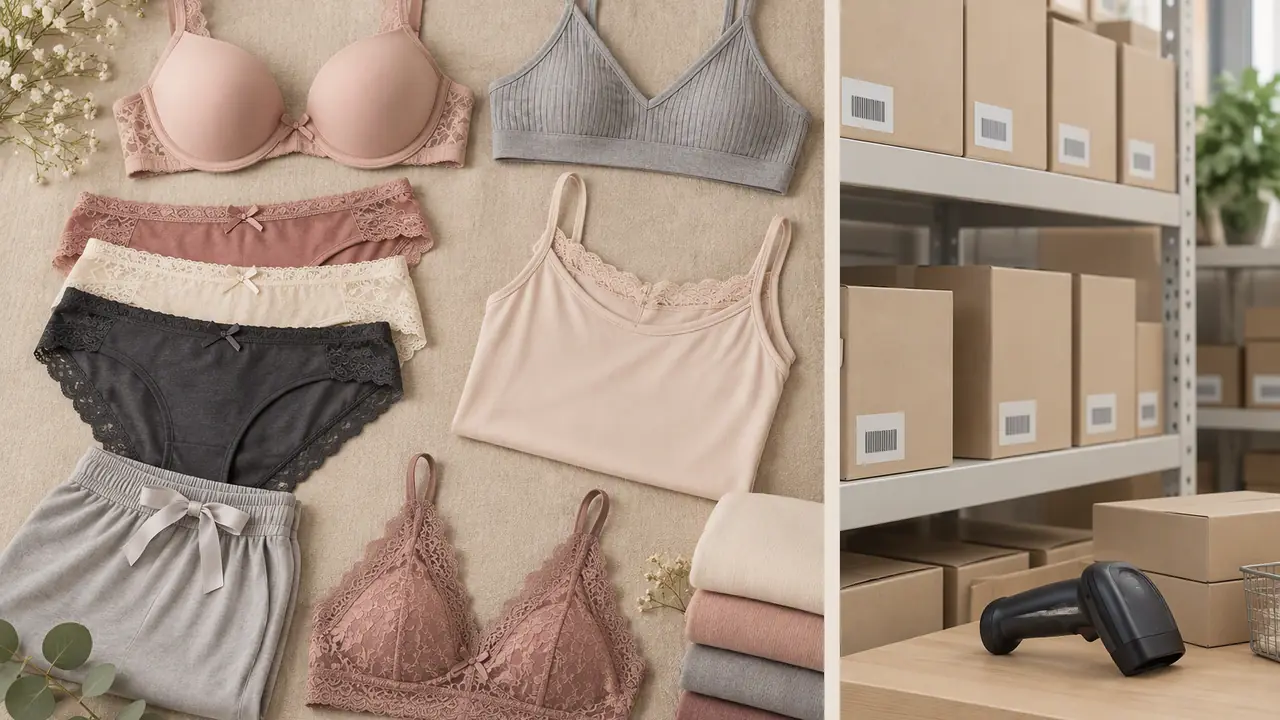
Samples do work beyond fit approval. The branded sample doubles as the photography sample for listings and lookbooks, and flat-lay or fabric close-up shots need no model at all. Retail chains often ask for a salesroom set - one piece per size in shelf-ready packaging - so the buying team can review the range as shoppers will meet it. Those requests belong in the sample plan from the start, because each extra sample type adds courier rounds and calendar weeks.
The calendar math is simple enough to do early. A branded sample at 15-25 days, plus one revision round, plus 5-8 days of express courier each way, puts a signed seal sample roughly two months from a finished specification. Bulk then runs 30-45 days on a catalog model or 35-50 days on a branded program. Brands that need the range on a fixed date should state the date in the first brief, and the quote form asks for exactly that.
Sample discipline and the road to bulk
Sample rounds are inexpensive compared with the bulk mistake they prevent, but unstructured rounds burn the calendar and blur accountability. The discipline that keeps programs on schedule is unglamorous: one consolidated revision list per round, every decision written against the specification, and the seal sample treated as the single standard of truth. At bulk release, the quality control route ties inspection to that seal sample, and the note on pre-shipment inspection shows what gets checked per lot. Where a brand is still weighing molds against custom work, the comparison in private label versus white label frames the choice.
A failed sample is still a useful document. When the second round misses on one point - say strap recovery after wash - the desk records the miss against the specification line it belongs to, so the third submission carries the fix in writing rather than in memory. Over a few programs that record becomes the brand's own knowledge base: which elastics held their recovery, which lace widths ran true, which cup molds graded cleanly. Brands that keep this file move faster on every program after the first, because fewer decisions are being made for the second time. The desk maintains the same record per program, and it is the reason a repeat order brief takes hours rather than weeks to assemble.