
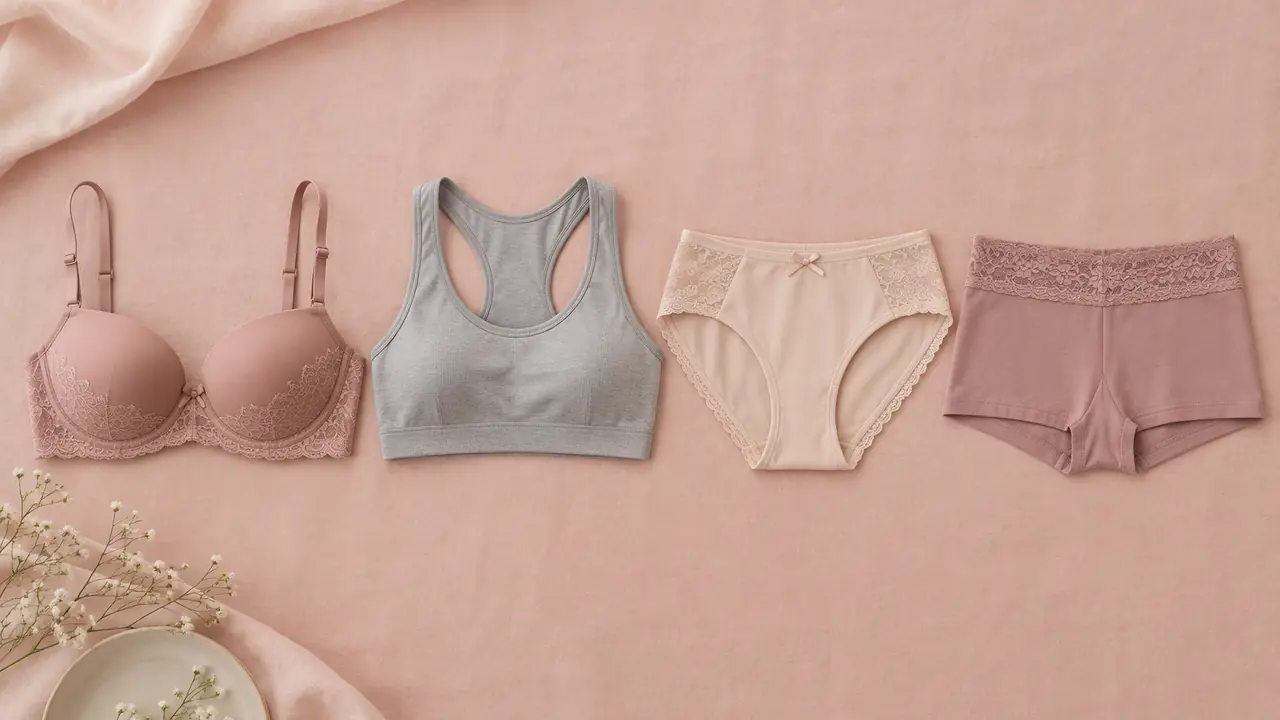
What period panties are
A period style is a full-coverage brief with an absorbent structure built into the crotch panel, extended backward and forward to cover the zones where the structure needs to sit. The outer shell reads like an ordinary brief - usually a stretch knit with a high cotton or modal share - and the functional part is invisible: wicking, absorption and containment live in the layers between the lining and the shell.
The category sits at the premium end of panty programs, which changes the buying math. Size runs span XS-3XL like ordinary briefs, but the color story is darker - deep, saturated shades dominate - and the construction content per piece is higher, which moves both the reference minimums and the sampling effort. The style family also carries a responsibility the rest of the panty category does not: the functional claims must be written carefully and tested, because the product has a job to do in wear.
Channel placement follows the premium read. DTC brands use the category as a subscription or repeat-purchase anchor; retail chains slot it into own-label wellness fixtures rather than basic multipacks; marketplace listings lean on detailed spec content because buyers compare functional claims across listings. In all three channels the documentation set travels with the product, which is why the test and certificate items below are planned at program start, not assembled at shipment.
The four-layer stack
Across the category the functional structure is typically described as four layers, each with one job. The exact materials and the number of plies inside each layer are per-spec decisions; what stays constant is the order of the jobs.
| Layer | Position | Job in wear |
|---|---|---|
| Wicking layer | Innermost, against skin | Pulls moisture off the surface and into the core |
| Absorbent core | Second | Holds the liquid; one or more plies, per spec |
| Containment layer | Third | Leak-resistant barrier per spec; keeps liquid in the core |
| Shell layer | Outermost | Carries the color, the shape and the look of an ordinary brief |
The stack is thicker than an ordinary gusset, so the pattern around it matters: the functional zone has to end in feathered transitions, or the edge of the stack prints through the shell and reads as a bulk line. Sample reviews should check those transitions explicitly, front and back.
Flow grades and how absorbency is specified
The category commonly splits into light-flow and heavy-flow grades. The grade is set by the core: more or denser absorbent plies, and sometimes a wider functional zone. What a buyer should insist on is that the grade is stated per spec sheet - what the style is designed to hold, over what wear window, per the plant specification - rather than implied by marketing language. Absorbency is a testable property, and the category has a standard per-order test item for it: gusset absorbency, run against the agreed method when the inspection scope is written.
Grades should also map to the size run honestly. A heavy-grade core in size XS behaves differently from the same core in size 3XL if the functional zone does not grade with the pattern; the zone dimensions belong in the size chart conversation alongside waist and hip, and the panty sizing note covers how letters map to measurements.
Testing and documentation
A documentation set for the category has four recurring items. First, contact-safety: OEKO-TEX Standard 100 per certificate per lot from the producing plant, which the OEKO-TEX note explains in detail. Second, function: gusset absorbency per order, against the agreed method, with results per grade. Third, durability: wash behavior of the functional layers across the declared care cycle, because a core that degrades in laundering fails the product promise even if the first wear performs. Fourth, labeling: fiber content and care instructions under the usual rules, with the care labeling note covering the US framework.
Buyers extending the program to markets with their own textile rules should map requirements before sampling; the fabric certifications guide lines up the certificate routes by market. The desk coordinates these document sets per program and keeps them with the lot records, since certificates are held by partner plants per lot rather than centrally.
Sizing and fit
Fit matters more here than in ordinary briefs for one structural reason: the functional layers only sit where they should if the garment stays in place. A style that rides or shifts moves the stack away from its zone, which the wearer reads as a product failure even though the layers performed. Fit samples should therefore be wear-tested with a full day of movement, across the size run and across both grades, before bulk - the same discipline as any full-coverage brief, applied more strictly.
Range planning and quantities
- Decide the grade ladder first: light, heavy, or both, and what each grade holds per the plant spec sheet.
- Fix the functional zone dimensions per size, and check the transitions in the sample round.
- Keep the shell fabric consistent with the rest of the panty program for color continuity.
- Agree the test set - absorbency, wash durability, contact safety - before bulk, in the inspection scope.
- Write the claims language from the spec sheet, not from generic category marketing.
- Plan the care cycle and the labeling together, so the declared care matches what the layers tolerate.
Reference quantities sit lower than ordinary panty minimums because of the construction content: typically 1,000-2,000 pieces per program across the category, confirmed in writing per program. Sampling lead is correspondingly longer than a basic brief, and the testing and inspection page shows where the functional tests slot into the pre-shipment plan. Both leads should be planned backward from the in-warehouse date rather than forward from the sample approval. When grades, zones and tests are sketched, the quote form is the fastest way to get matched plants and a written specification back.