
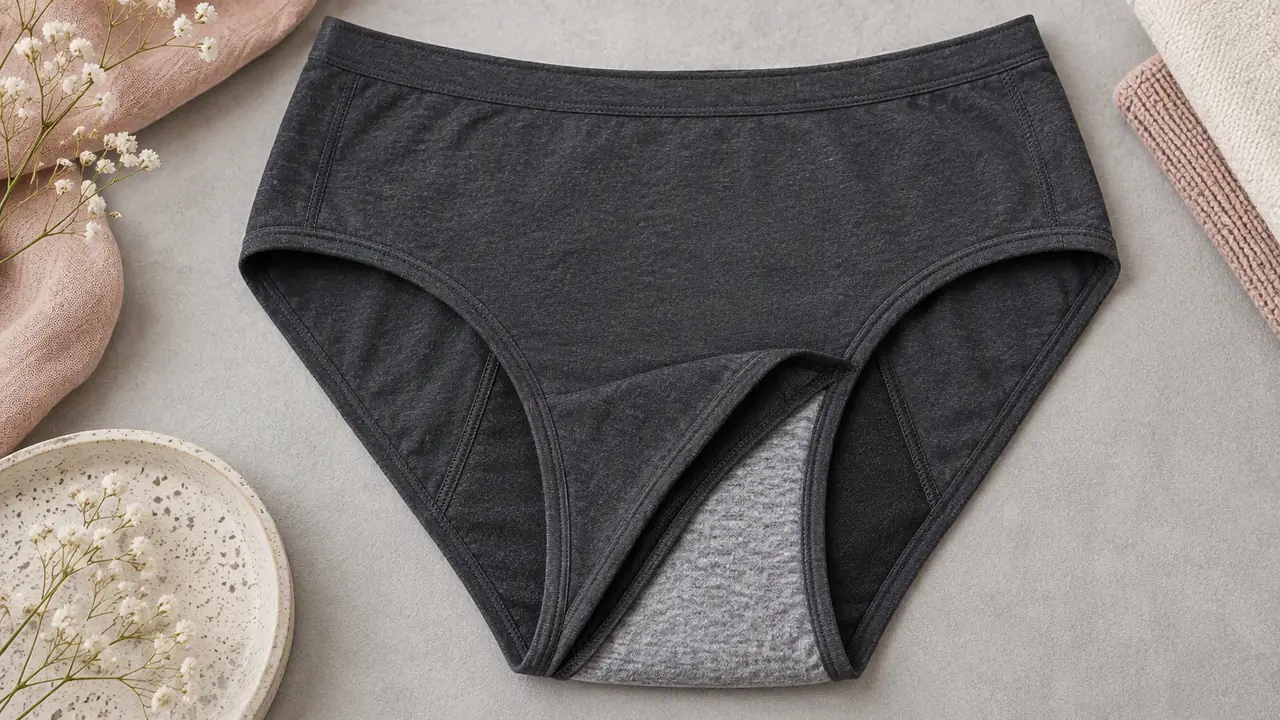
What a period panty is
A period panty is a full-coverage panty built around a functional stack in the gusset zone: instead of a single cotton lining, the gusset carries a four-layer absorbent structure - a wicking face layer, a layered absorbent core, a leak-resistant backing applied per the spec sheet, and the base body fabric. The garment is then specified in flow tiers, light and heavy, defined on the program sheet rather than left to interpretation.
The line behaves differently in a sourcing program. Where a brief is a color and fit conversation, a period panty is a structures conversation: which core build, which membrane, how the layers are secured so they do not shift or delaminate in the wash, and what the absorbency test protocol says. Reference MOQ runs lower than the fashion lines - typically 1,000-2,000 pieces per color - because development carries the weight, and the desk treats the line as its own program from the first sample onward.
The six layers on the card
| Layer | What decides quality | Typical options |
|---|---|---|
| 1 Face fabric | Wicking speed, hand feel, opacity | Cotton or cotton-modal jersey, brushed wicking face |
| 2 Absorbent core | Layer count, core stability, distribution through the zone | Layered textile core, light or heavy flow tier |
| 3 Backing layer | Leak resistance per spec, flex durability, breathability balance | Laminated leak-resistant membrane per sheet |
| 4 Edges and trims | Bond integrity after wash, edge flatness | Bonded or coverstitched edges, full-rise waistband |
| 5 Fixings and labels | Label comfort, size and care marking durability | Tagless heat-transfer labels, size and care print |
| 6 Packaging | Discretion and retail readiness | Individual sealed poly bag, discreet outer carton |
Structure options and size runs on this page are typical ranges seen across the category, not a datasheet. Each program carries its own spec sheet, and the figures a brand prints are confirmed from that sheet. The layered build is explained further in the period panties guide.
The absorbent structure, layer by layer
The stack works as a sequence. The wicking face pulls moisture off the skin and into the core; the layered core holds and distributes it through the gusset zone; the backing resists passage per the spec sheet while staying flexible enough to move with the garment; the body fabric carries the fit. Each layer is a named line item with its own options - core layer count and placement for the flow tier, membrane weight for the backing - and none of them are interchangeable between tiers without a new spec sheet.
Two construction points decide long-term performance. First, layer security: the stack is stitched or bonded so it cannot migrate in the wash, and the method is sampled before the batch. Second, edge sealing at the leg line, where bonded edges keep the structure's profile low. The desk writes both into the program sheet as named options, the same discipline applied to the brief and boyshorts blocks.
Testing the gusset
Gusset absorbency is a named test item in the inspection plan, agreed per order alongside the category standard items - colorfastness, shrinkage, pH, pilling and stretch recovery. The protocol defines how absorption and retention are measured for each flow tier, and how performance is re-checked after repeated wash cycles, because a core that reads well on first test but collapses at cycle twenty is the line's real defect risk. The test framework sits inside testing and inspection.
Claims discipline and certification
The desk specifies the line as an absorbent garment and holds marketing copy to structure facts: what the layers are, what the test protocol shows, per spec sheet. Listings and packaging avoid barrier absolutes - the working wording is leak-resistant per spec - and no health or treatment claims are made anywhere in the program. Fabric safety follows the category baseline: OEKO-TEX Standard 100 per lot, covering every layer of the stack from face fabric to membrane, plus US fiber content and care labeling under the Textile Fiber Products Identification Act and the FTC Care Labeling Rule, and REACH screening for EU-bound batches. The route is set out in the fabric certifications guide.
Where period panties are made
The line needs lamination and multi-layer handling on top of ordinary cut-and-sew, so the desk shortlists partner plants in the Guangdong clusters - Puning and Shantou - by membrane sourcing, lamination capability and the absorbency test file they can run per lot, with Yiwu capacity in support for value tiers. Development samples take longer than a fashion panty because the core and membrane options are engineered, not pulled from stock. More on the clusters.
Inspection before shipment
- Core layup verification: layer count, placement and tier marking against the program sheet.
- Bond or stitch integrity at the leg edges and waistband after stretch cycles.
- Gusset absorbency and retention per the agreed protocol, both flow tiers.
- Re-test after the agreed wash cycle count to confirm the structure holds.
- Color against the retained swatch under a standard lamp.
- Carton drop test, sealed poly bag integrity, fiber and care labels against the approved sheet.
The plan is written per program and confirmed before the first batch; see quality control. Reference quantities and timing sit on the MOQ and lead time page, and the quote form captures the flow tiers and structure options a plant will ask for.