
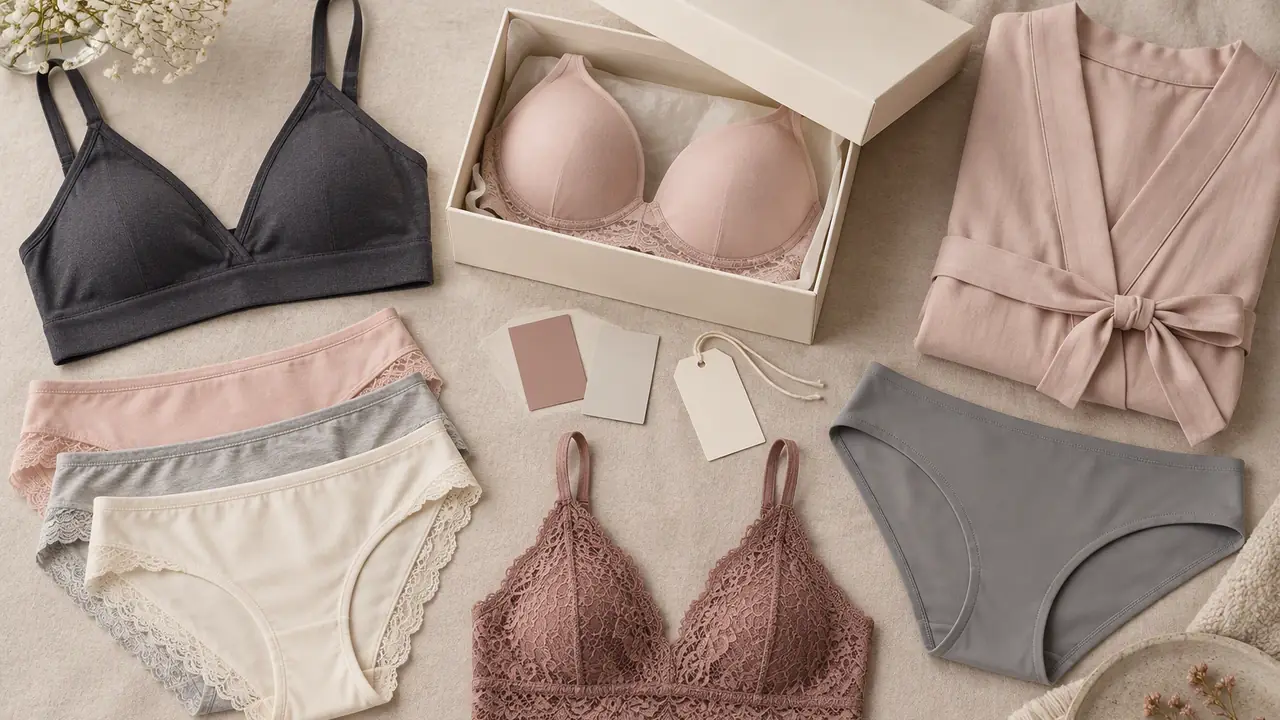
OEM, ODM and white label, defined
The three routes differ in who owns the engineering. OEM means the plant cuts to the buyer's design on the plant's pattern base: the buyer specifies construction, fabrics and branding, and the plant executes. ODM starts from a base the plant has already developed; the buyer selects, adjusts colors and labels, and shortens the road to a first order. White label is stock goods under a new label, the fastest and least differentiated route.
For intimates the choice is usually about fit risk. Bras carry cup molding and wire geometry, so brands that care about fit lean OEM even at higher MOQ; panty constructions are more forgiving, which is why ODM and white label are common entry points there. Many real programs mix the routes: an OEM flagship bra beside an ODM bralette tier, all on one color ladder. The private label versus white label comparison sets out that trade in detail.
Color card and lace programs
Color is where private label programs are won and lost. The working tool is the color card: a fixed ladder of core colors held stable across seasons, plus seasonal additions that retire rather than accumulate. Each color runs with a retained swatch, and every lot is compared against that swatch under a standard lamp before shipment. Dyed-to-match lace is the long pole: engineered lace in a custom color typically adds a 45-60 day first development run, which is why the color ladder is decided before styles are counted, not after.
Sample stages, in order
- Development sample: a construction proof on the chosen fabrics, before branding is applied, that answers whether the build works at all.
- Fit sample: the size set that proves the chart, checked against the spec card measurements rather than by eye.
- Pre-production sample: the exact build, fabrics and branding of the first batch, signed off as the reference the batch is judged against.
- Shipment sample: pulled from the finished lot and compared against the pre-production reference during inspection, then filed with the report.
Each stage has one approval gate, and skipping a gate moves the risk downstream: a batch approved without a graded fit set is a batch that argues about sizing after it lands. Sample timing follows the route - 7-15 working days for a catalog model, 15-25 for branded samples, 20-35 where a custom print or lace is in play.
Typical MOQ and lead ranges
The ranges below are the reference figures quoted across the category. They are starting points for planning, not offers: every quantity and date on a real program is confirmed in writing before anything is booked.
| Route | Typical MOQ | Sample time | Batch lead |
|---|---|---|---|
| Stock catalog model | 500-1,000 pcs per color | 7-15 days | 30-45 days |
| Private label on plant pattern | 1,000-3,000 pcs per color | 15-25 days | 35-50 days |
| Panty programs | 2,000-5,000 pcs per color | 7-25 days by route | 30-50 days |
| Period panties | 1,000-2,000 pcs | 15-25 days | 35-50 days |
| Custom lace or print development | Lace 500-1,000 m | 20-35 days | Per program |
| ODM first order | Per program | 20-35 days | 60-90 days |
Branding and packaging options
Branding lands in four places: the garment label (woven, printed or tagless heat transfer), the hangtag or band statement, the retail packaging, and the listing content that repeats both. Packaging follows channel - poly bags for marketplace, boxes with inserts for retail shelves, gift builds for hospitality programs - and each option is quoted on the spec card so the branded unit and the shipped carton tell the same story. Label artwork files, color references and placement diagrams are collected once at program start and reused across every line in the range. The packaging and retail boxes page shows the options with their typical setups and file requirements.
What the desk confirms in writing
A program brief closes with five written confirmations: MOQ per color, batch lead time, the color tolerance standard, the certification route with document scopes, and the sample gate schedule. Those five lines prevent most disputes a sourcing program meets - and they are what the sourcing process and the OEM and private label capability page are built around. When the route is chosen, the quote form captures it in the format plants quote against.