
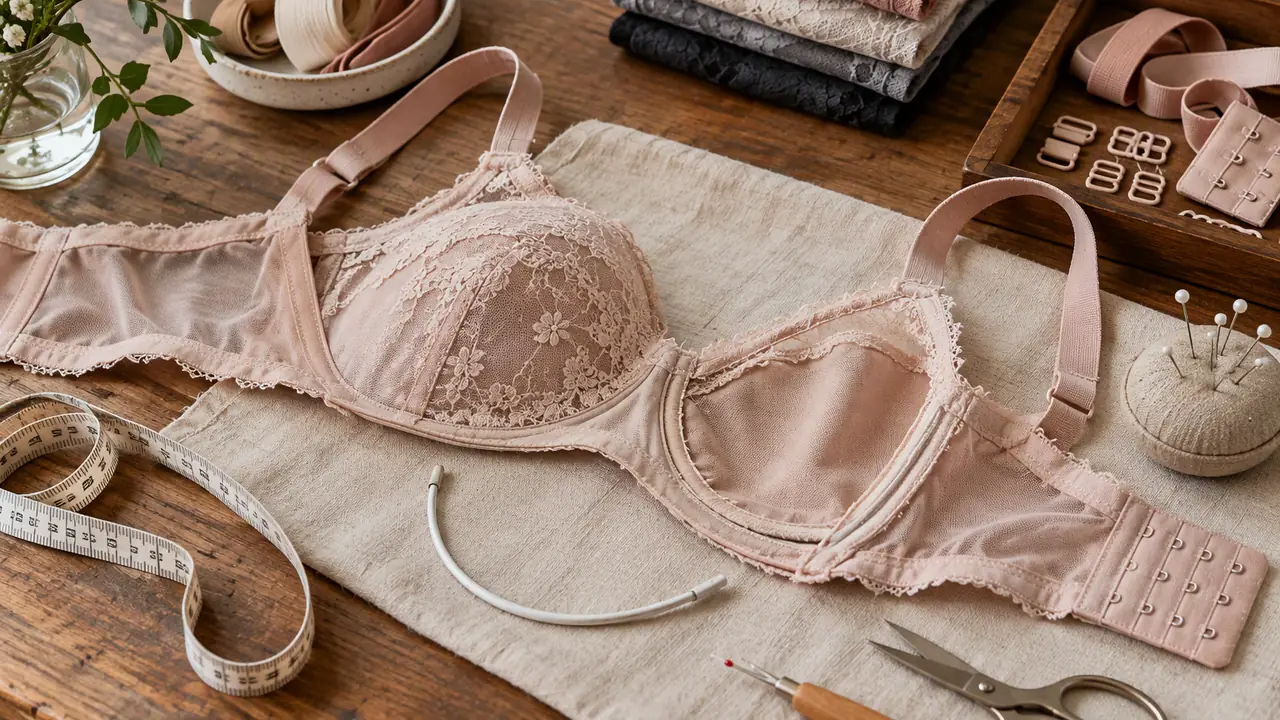
What band ride-up tells you
The band anchors the frame to the torso, sets the wire or the cup structure at the right height and carries the largest share of the load in any construction, wired or wireless. When a band rides up at the back, the anchor has failed in one of three ways: the pattern does not match the torso it was graded for, the elastic has lost the recovery it was specified for, or the construction cannot hold tension at the sizes it is sold in. Ride-up is therefore a diagnostic sign before it is a comfort complaint, and reading it correctly is what separates a one-off fit issue from a program-level defect.
For a brand or distributor the commercial weight is real. Fit complaints are among the most common reasons intimate apparel comes back, and a band that climbs within an hour of wear generates them at scale. The fit checks that catch the problem before shipment are simple and cheap; the note on signs of a good fit lists them alongside the cup and strap checks. This note stays with the band: what causes ride-up, which construction decisions decide it, and what a buyer writes into the spec so the third sample is the last one.
The three mechanical causes
Nearly every ride-up complaint traces to one of the rows in this table. The rows are ordered by when the symptom appears, because timing is the best diagnostic a fit team has: a band that climbs on first wear points to pattern or size, while a band that climbs after weeks of laundering points to materials.
| When it shows | Likely cause | Construction check | Spec response |
|---|---|---|---|
| First wear, new garment | Pattern rise too shallow for the torso, or band sized too loose | Band tension on body at the smallest and largest ladder sizes | Re-block the pattern; confirm the size run against the measurement chart |
| After several wash cycles | Elastic relaxation below spec | Stretch recovery tested before and after repeated laundering | Higher-recovery elastic; recovery as an order-agreed test item |
| Back only, larger sizes | Wing too shallow or too few closure rows for the load | Wing depth and closure count at each band breakpoint | Deeper wing; additional closure rows on the upper ladder |
| Under movement only | Band correct at rest but insufficient under load | Movement sequence in the fitting room, not the mirror | Firmer wing fabric; low-stretch compression layer inside the wing |
The table also shows why sample reviews at center sizes miss the problem. A pattern can pass at a 34B and fail at a 38DD because wing depth and closure rows were never re-engineered across the ladder. Grading structure, not only fabric, is the discipline that keeps ride-up out of the returns queue, and it is the first question the desk asks plants that quote a wide band range.
How construction holds a band down
Three components decide whether a band stays put. The first is the elastic itself: its recovery - how completely it returns after stretching - is the property that fades with heat and age, and stretch recovery is an order-agreed test item in the desk checklist. The note on elastic types compares band, strap and leg elastics and where each fails first. The second is the wing: a shallow wing cannot carry tension across the back, so plants that serve larger cups typically deepen the wing and line it with a low-stretch compression fabric. The third is the closure: every additional hook row spreads load across more of the band, which is why upper ladder sizes usually carry more rows, as the note on hook and eye closures explains.
Material grades sit under all three. Skin-contact elastics and wing fabrics are verified per certificate per lot, with OEKO-TEX Standard 100 as the baseline the desk asks for on intimate programs. A cheaper elastic can pass the first fit round and still fail the program if its recovery decays faster than the care instructions allow for, which is why the wash test belongs in the program file rather than only in the laboratory.
Fit checks that catch ride-up early
- Two-finger check at the back of the band: two flat fingers should slide under with slight resistance while standing at first fit.
- Raise both arms overhead: the band should hold its level; note any climb beyond a finger width.
- Sit and lean forward for a minute: ride-up under seated posture exposes a shallow pattern rise that standing hides.
- Wear the sample through a normal day before judging it, because static fitting-room checks miss movement failures.
- Wash the sample three times and repeat the sequence, which separates pattern problems from elastic problems.
Care, laundering and elastic aging
A share of ride-up complaints starts with nothing wrong at the point of sale. Heat from machine drying, repeated aggressive wash cycles and storage folded under heavy items all accelerate elastic relaxation, and consumer care habits vary widely. The practical responses are two. On the product side, specify elastics whose recovery survives the instructions printed on the label, and confirm those instructions follow the FTC Care Labeling Rule for the United States market, as the note on care labeling rules explains. On the content side, brands that explain rotation and washing in their after-sales material see fewer elastic-related complaints, and the note on bra lifespan is written to be reused for exactly that purpose.
When a complaint does arrive, the timing pattern from the table above sorts causes quickly: first-wear ride-up goes back to pattern, post-wash ride-up goes back to elastic, and size-dependent ride-up goes back to grading. Documenting which pattern a program shows across a season tells the desk whether to reopen the pattern block or to change the elastic supplier on the next order.
What to specify before bulk
The specification items that decide band stability are few and cheap to write. State the full band and cup run up front, and ask which closure row count and wing depth apply at each size breakpoint. Name the elastic grade and require stretch recovery as an order-agreed test item, reported before and after repeated laundering. Require a wear test at the smallest and largest sizes, not only at the center. Typical reference timing across the category: catalog-model samples in 7-15 days, branded samples in 15-25 days, bulk in 30-45 days for catalog models and 35-50 days for branded programs - all confirmed in writing per order, with reference quantities on MOQ and lead time. The quote form carries the size run and the test list so partner plants quote the same program, and the note on quality control describes the in-line checks that hold the standard through bulk.