
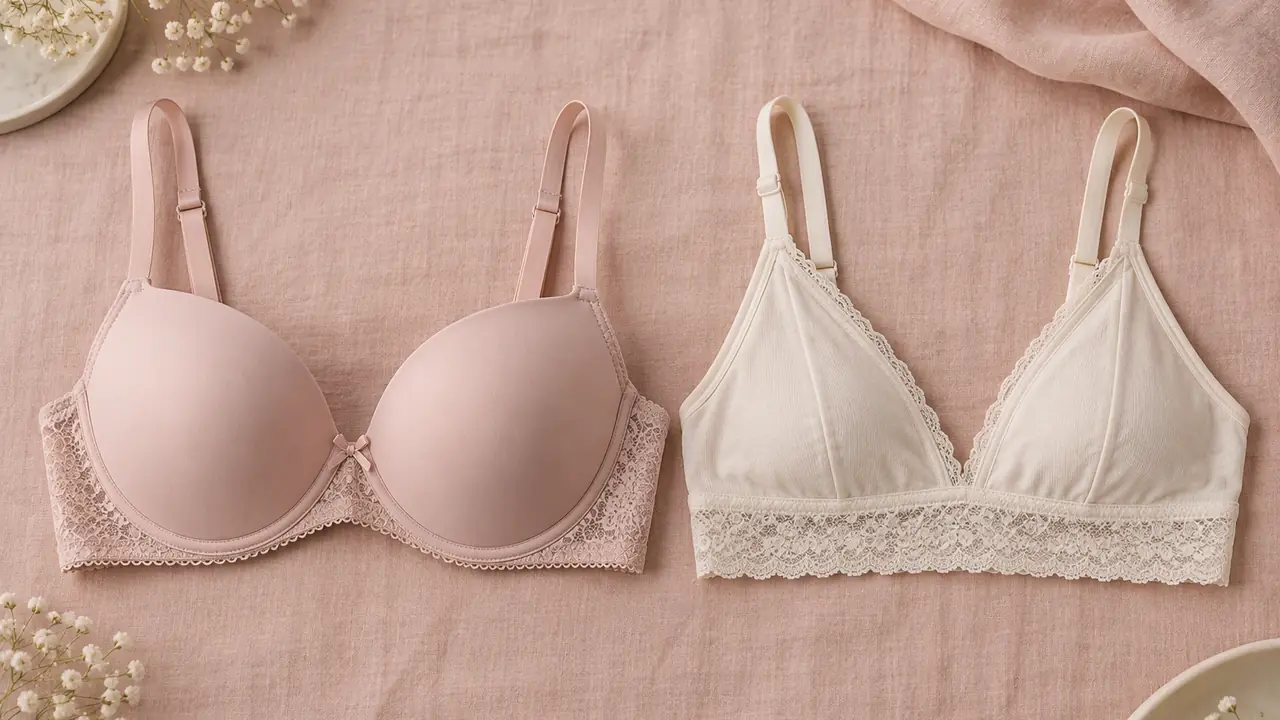
What the fiber actually does
Cotton is a hydrophilic fiber: its structure absorbs and holds moisture, which is why a cotton panty feels absorbing and dry to the touch at first and then stays damp longer once wet. Polyester and polyamide, the two synthetics behind most microfiber panties, absorb very little; moisture sits in the fabric structure rather than the fiber and evaporates faster. Elastane, added to both sides of the comparison at a few percent, contributes stretch and recovery rather than moisture behavior.
Neither behavior is better in the abstract. Absorbency is comfortable in low-output, all-day wear and slower to dry; quick drying suits travel, sport-adjacent wear and humid climates, with less of the cling that a saturated knit produces. A buyer who frames the choice as fiber behavior rather than as a quality ranking lands on the right blend per channel, and can explain it on the listing without drifting into health claims the category does not allow.
Side by side: fiber properties in wear
| Property | Cotton | Synthetic (microfiber) |
|---|---|---|
| Absorbency | Holds moisture in the fiber | Low absorbency, moisture passes through |
| Drying speed | Slower once wet | Faster, less cling |
| Stretch | Needs elastane for recovery | Natural give in the knit, plus elastane |
| Hand feel | Matte, softens with washing | Smooth, slick surface |
| Shrinkage watch | Yes, checked per order | Low at standard wash temps |
| Pilling watch | Low on combed yarns | Depends on denier and knit density |
| Typical blends | Cotton with 5 percent elastane | Polyamide or polyester with elastane |
The blend line matters more than the fiber line. A pure cotton knit with no elastane has poor recovery and bags at the leg opening; the trade standard for everyday briefs is a cotton-rich blend with a small elastane share, which keeps the absorbency of the fiber and adds the recovery of the yarn. The microfiber versus cotton note in the fabrics group covers the weight and feel dimension in more depth.
The gusset rule across the trade
Whatever the body fabric, the gusset - the lined panel at the crotch - is where this comparison gets practical. Across the trade, cotton or cotton-rich gusset linings are the norm even on synthetic panties, because the lining sits against skin and cotton handles that position well. The desk treats the gusset lining as a specification item, not an assumption: fabric, color, and whether the lining is knit-in or sewn are all written into the tech pack, because suppliers default differently and a synthetic gusset on a listing that says cotton lining is a returns driver.
Modal sits between the two poles and has become the middle-ground answer. It is a regenerated cellulosic, so it absorbs like a natural fiber while knitting with a smoother, more uniform surface than cotton; the cotton versus modal note compares the two directly. Ranges that want a premium everyday story often run modal bodies with cotton gussets, which keeps the tactile story while trimming the shrinkage risk that pure cotton knits carry.
Breathability, framed honestly
Breathability claims are where panty listings get sloppy, so the desk keeps the wording structural. Airflow through a knit, moisture behavior at the fiber, and drying time are measurable fabric properties that a spec sheet can state. Claims about skin health, pH balance or hygiene outcomes are not - they drift into territory the category avoids, and the desk does not carry them. What can be documented is the testing: OEKO-TEX Standard 100 certification covers more than three hundred harmful substances from yarn to finished goods, held per certificate per lot by the partner plant, and per-order test items typically include colorfastness, shrinkage, pH and pilling. The fabric certifications guide sets out which documents attach to which claims.
Framed that way, the listing can say what the fabric does - absorbs, dries quickly, holds shape through wash - and let the buyer choose. Ranges that over-claim breathability tend to collect reviews that mention dampness in cotton styles or clamminess in heavy synthetics; ranges that describe behavior accurately collect fewer surprises. The reviews a panty line avoids are worth more than the adjectives it could have used.
Care, durability and the wash cycle
Care instructions diverge with the fiber. Cotton knits shrink at higher wash temperatures, which is why shrinkage sits on the per-order test list and why cotton care labels call for cooler washes. Synthetics tolerate standard wash temperatures better but are sensitive to high-heat drying, which can distort elastane and flatten a microfiber surface. Pilling shows up differently: low on combed cotton yarns, variable on synthetics depending on denier and knit density, and the pilling note explains how blends and care interact.
Lifespan in wear follows the elastic as much as the fiber. In both constructions the leg elastic and waistband relax before the body fabric fails, so a program comparison on durability is really a comparison of elastics and construction quality. That is convenient for buyers: the elastic specification, the seam type at the leg opening and the waistband construction are all choices written before sampling, not accidents of the fiber.
Program notes for buyers
Panty minimums run higher than bra minimums because unit value is lower: typical reference ranges are 2,000-5,000 pieces per color across the category, confirmed in writing per program on the MOQ and lead time page. That arithmetic shapes the cotton-versus-synthetic decision: cotton basics are the volume anchors that marketplace sellers restock on a predictable cycle - the marketplace seller program is built around them - while microfiber and modal styles carry the fashion and premium tiers where hand feel photographs better and the price point sits higher.
- Split the range into an anchor tier and a fashion tier before choosing fibers.
- Anchor tier: cotton-rich blends with cotton gussets, restocked on a predictable cycle.
- Fashion tier: microfiber or modal bodies, where surface and drape carry the listing.
- Write the gusset lining into the tech pack for every style, whatever the body fabric.
- Put shrinkage on the test list for cotton, pilling and elastane recovery for synthetics.
- Keep the listing claims structural: what the fabric does, not what it achieves.
When the fiber split is decided, the quote form takes fiber content, gusset lining and quantity per color per style, and the brief line shows the everyday anchor style most programs start from.