
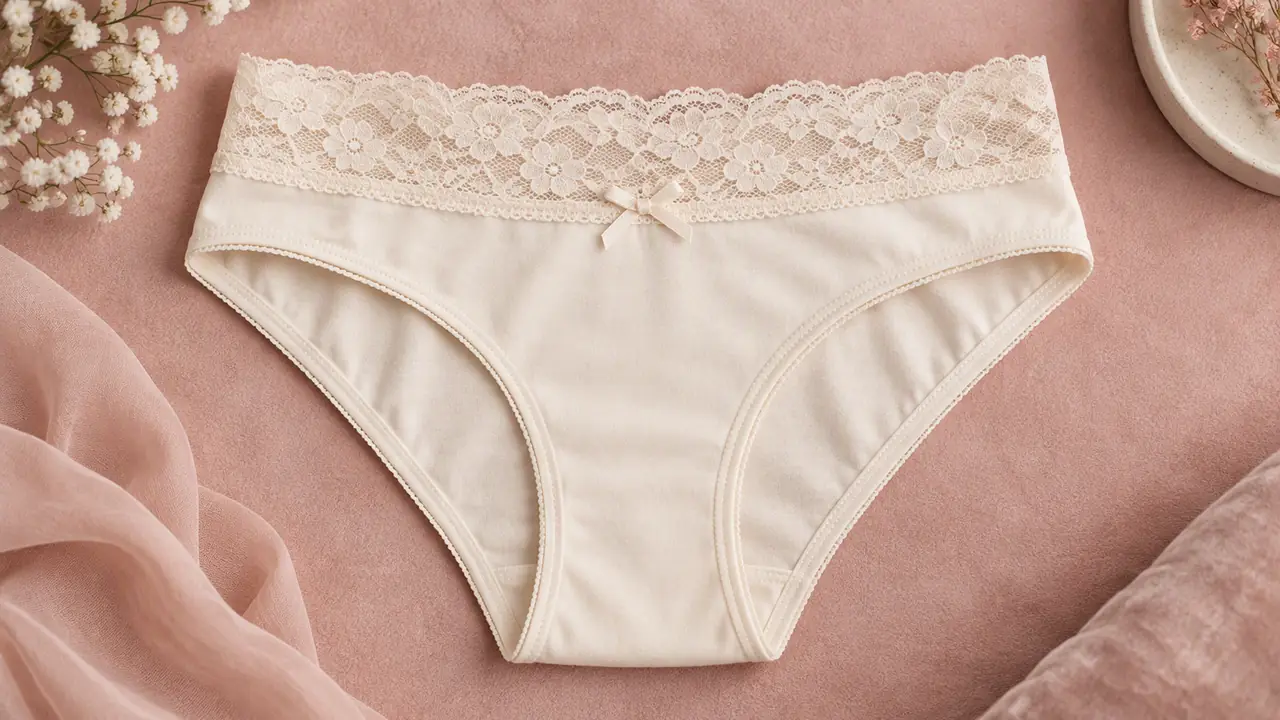
What a brief panty is
A brief is the reference point of the panty category: the waistband sits at the natural waist, just below it or on the hip, and the rear panel covers the seat completely. The silhouette trades fashion exposure for everyday wearability, which is why briefs anchor the basics shelf of most retail and marketplace programs and why the size run is the widest of the panty lines - typically XS to 3XL - graded without distorting the leg line at either end.
For a sourcing program the brief rewards disciplined basics engineering. A waistband that rolls, leg elastic that marks the skin or a rear seam placed off center each generate returns long before a fashion miss would. Plants in the Chinese clusters cut briefs in large volume, so the differentiator is not capability but consistency: elastic lots, stitch density and color matching held steady across a season.
The six layers on the card
| Layer | What decides quality | Typical options |
|---|---|---|
| 1 Body fabric | Hand feel, stretch recovery, opacity after washing | Cotton-modal jersey, combed cotton, microfiber, lace panels |
| 2 Gusset lining | Fiber purity, stitch plan, breathability | OEKO-TEX cotton, single or double layer |
| 3 Rear panel | Cut geometry, seam placement, seat coverage | Full-coverage back, center seam or seam-free |
| 4 Waistband and leg edges | Elastic recovery, softness, roll resistance | Coverstitched elastic, picot, bonded or lace edges |
| 5 Fixings and labels | Label comfort, brand placement durability | Woven or heat-transfer labels, tagless print |
| 6 Packaging | Presentation and marketplace readiness | Poly bag, tissue wrap, printed box, multi-pack bands |
Weights, elastic specs and size runs on this page are typical ranges seen across the category, not a datasheet. Each program carries its own spec sheet and the figures a brand prints are confirmed from that sheet. The panty styles guide sets the brief against bikini, boyshorts and thong vocabulary.
Rise, seat and leg-line options
Rise is the first specification because it moves the waistband and the rear cut together:
- High rise. Waistband at the natural waist, maximum front and rear coverage; the construction questions are in the high-waisted guide.
- Mid rise. Just below the navel; the volume position for multi-packs and family packs.
- Low rise. On the hip; needs a waistband engineered to hold recovery without marking at the hip bone.
The rear panel is the second decision. A center rear seam stabilizes the cut and costs little; a seam-free back uses a cleaner cut and higher-skilled bonding or blind stitching. Both stay in the program sheet as named options, because seat geometry is where brief returns actually originate.
Fabric, hand feel and color batches
Cotton-modal jersey is the workhorse: soft hand, stable dyeing, predictable shrinkage. Combed cotton serves the value tier; microfiber gives a smooth line under close-fitting garments; lace-panel briefs lift the fashion tier without changing the base block. The trade-offs between the two main fibers are set out in cotton vs modal.
Color is the recurring risk. From one dye lot to the next, a brief can drift visibly against its own multi-pack mates, so the desk keeps a retained swatch per program and checks every incoming lot under a standard lamp before release. The checks sit inside the wider quality control plan.
Certification and labeling
Because the category sits in permanent skin contact, OEKO-TEX Standard 100 is the baseline certificate, requested per lot and covering yarn to finished product - gusset lining and elastics included, not just the face fabric. In the United States, fiber content labeling follows the Textile Fiber Products Identification Act, care labeling follows the FTC Care Labeling Rule, and 16 CFR 1610 covers garment flammability. EU-bound programs add REACH SVHC screening. The full route is in the fabric certifications guide.
Where briefs are made
Cut-and-sew briefs come primarily from the Puning belt in Guangdong, which holds the deepest panty supply chain in the country, from tricot and elastic through to finished-goods inspection, with Shantou adding strength in lace handling and Yiwu in seamless and value-tier volume. The desk shortlists plants by elastic sourcing, gusset stitching discipline and the certificate file they can produce per lot. More on the clusters.
Inspection before shipment
- Waistband circumference, rise height and seat width on sampled units against the program sheet.
- Leg elastic and waistband recovery after repeated stretch cycles.
- Rear panel alignment and seam placement against the approved sample.
- Gusset lining attachment, fiber content and stitch density.
- Color against the retained swatch under a standard lamp, multi-pack consistency included.
- Carton drop test, fiber and care labels, and multi-pack contents against the approved sheet.
The inspection plan is written per program and confirmed before the first batch; see quality control. Reference quantities and timing sit on the MOQ and lead time page, and the quote form lists what the plants will ask for.