
Why bundles fit this category
Intimates are consumable, replaceable and bought in sequences, which is the profile bundles reward. A bralette is a considered purchase; a five-pack of briefs in neutral shades is a routine one, and routine purchases bundle naturally. Bundles also carry a value logic without touching a price figure: the pack frames worth by composition - more pieces, coordinated shades, one decision - rather than by discount language, which platforms increasingly police and buyers discount in turn. For a young brand, a bundle raises the basket on existing styles, which stretches a narrow line further than a second style would. And operationally, a pack moves volume per SKU: the pick-and-pack effort per order falls as units per order rise, a line item every DTC operator recognizes.
Formats that repeat across channels
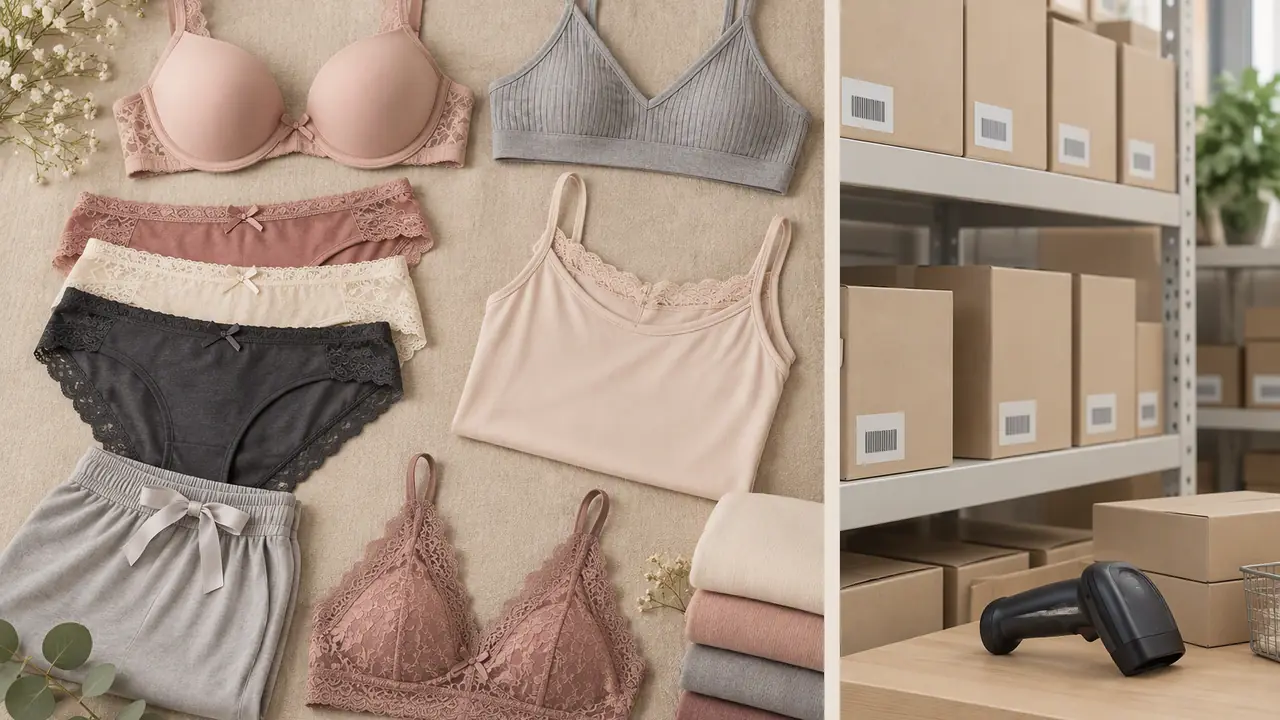
Five formats cover most of what the desk assembles:
| Format | Typical contents | Suits | Note |
|---|---|---|---|
| Panty multi-pack | Three, five or seven briefs in coordinated neutrals | Marketplace, DTC | MOQ runs 2,000-5,000 pieces per color |
| Bra and panty set | One bra with matching bottom | Brand owners, gifting | Grading must span both garments |
| Period starter kit | Two or three pieces across light and heavy flows | DTC | Period lines run 1,000-2,000 pieces |
| Travel or hospitality pack | Lightweight briefs packaged for single use | Hospitality projects | Hygiene seal per piece |
| Occasion gift box | Set plus rigid box and insert | Retail chains, gifting | Shelf-ready artwork per program |
The formats mix well. A fourth-quarter gifting program might run a multi-pack line, a set in a gift box, and a period kit as the subscription candidate, all from the same palette and the same label artwork. That is the quiet advantage of bundling on a narrow range: one development effort, several selling formats.
Why multi-packs fit panty economics
Panty construction is simple relative to a bra: fewer panels, no cup molding, no wire, and the grading is a waist and hip ladder. That simplicity is what makes the multi-pack work - the per-piece production effort is low enough that a five-pack remains a coherent product, while the minimum runs 2,000-5,000 pieces per color at the reference range. Neutral palettes do the rest: a pack built on black, white and two or three skin tones needs no seasonal dye development, rides the continuity colors the plant already runs, and reorders without new lab dips. Seasonal accent packs exist, but they inherit the whole color-development calendar - sample, dye approval, bulk, freight - described in the note on color range planning, which is why the desk treats them as a fourth-quarter product, not a year-round one.
Bundles also do quiet work for visibility. On marketplaces, a multi-pack concentrates reviews on one SKU instead of scattering them across five single-style listings, and review depth is what a new listing lacks most. In DTC, a period starter kit is the natural entry into a replenishment relationship: the kit teaches the absorbency ratings, and the reorder becomes a single style chosen from experience rather than a fresh decision. Retail chains read bundles as planogram units - a set with a rigid box occupies one facing and sells as one decision, which simplifies both the shelf plan and the replenishment count. Each channel arrives at bundles for a different reason, and the format list above is arranged so the channel column answers before the contents column does.
Sizing across a pack
Sizing is where bundles are won or lost. A single-size pack - all five pieces in the same waist size - is simple to build and simple to buy, and it is the default for a first program. A mixed-size pack trades convenience for coverage: three mediums and two larges serve a household or a buyer between sizes, but it multiplies the size matrix per SKU and complicates both grading and stock. Sets add a second axis, because the bra grades by band and cup while the panty grades by waist; a set SKU has to define which pairings exist, and the desk recommends locking that matrix before sampling rather than after. The grading mechanics are in the note on sizing and grading for production runs, and the fit guide carries the chart logic. Whatever the matrix, each piece still carries its own size marking: a pack is five garments to the washing machine, whatever the outer wrap says.
Packaging and labels for packs
A bundle changes the packaging job in three ways. First, the outer pack carries program branding while each piece inside still needs its own fiber content, origin and care marking - the rules follow the garment, not the pack, per the Textile Fiber Products Identification Act and the FTC Care Labeling Rule. Second, export cartons gain cube fast: packs are bulkier per garment than single polybags, and the pack-out decided at the packaging stage determines container fill, the same freight mechanics described for single styles in packaging for export. Third, hygiene presentation matters more: a pack reads as more personal than a single, so resealable wraps, hygiene seals and a clean interior fold are what buyers expect to find. Gift boxes add a rigid carton, an insert and a print deadline; the insert usually carries the care lines and the program story in one panel. One rule holds across all of it: the pack is specified as a single SKU with its own dimensions and weight, because freight, storage and the listing all read the pack, not the garments inside it.
Specifying a bundle: a sequence
- Fix the format and channel first, because minimums and packaging follow from it.
- Lock the size matrix: single-size versus mixed pack, and the pairing rule for sets.
- Build on continuity shades to stay inside the 2,000-5,000 pieces per color panty reference range.
- Agree per-piece labeling and the hygiene presentation with the packaging route before bulk.
- Confirm the pack dimensions with the freight plan so cartons fill containers cleanly.
- Bring the pack structure to the quote form as one program with one specification.