
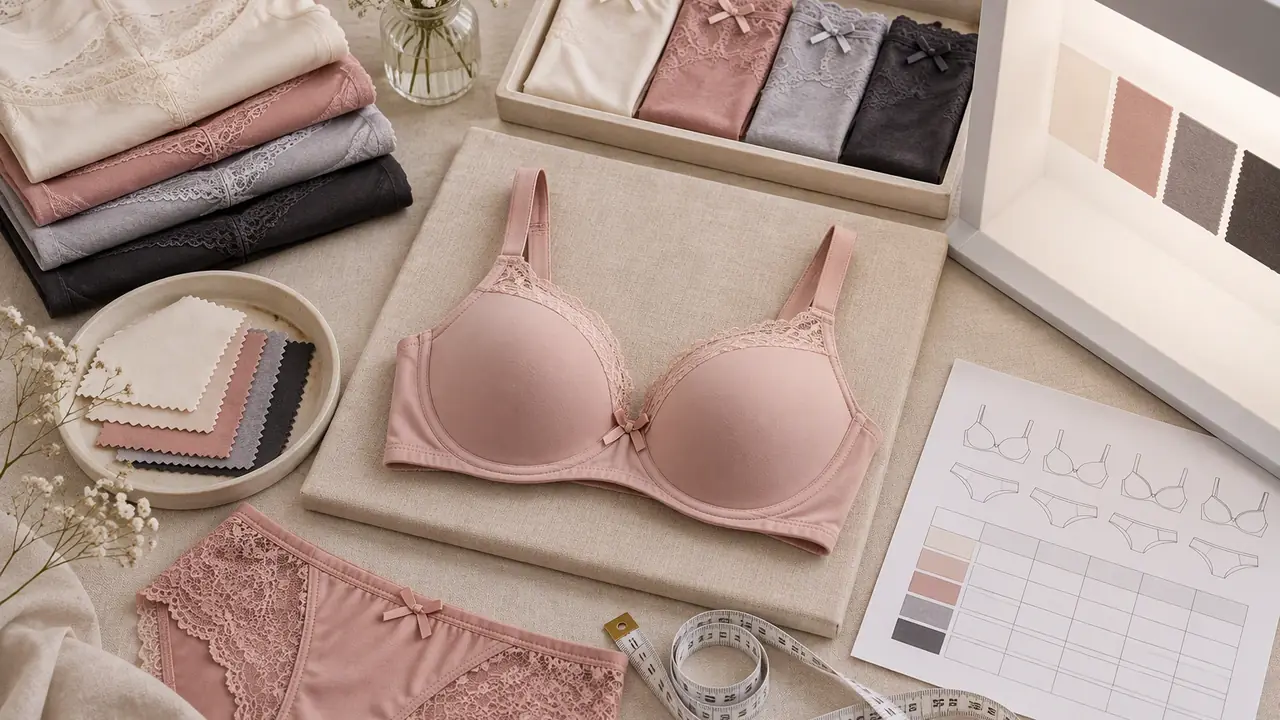
There is no enforced standard behind the label
A size label is a claim, not a certificate. No international body audits whether a 34C bra measures a 34C; the band-cup conventions are widely shared habits, not regulations, and within them each publisher makes small choices - where to round the underbust, when to double letters, how to read the cup difference. Those choices are individually invisible and collectively large: two honest charts following different habits hand the same measurements sizes a step apart.
The absence of enforcement is not chaos, but it does move the burden. Whoever puts a label on a garment defines what that label means for their range, and the wearer's only recourse is experience with that range. For a brand, the corollary is empowering: nobody can stop you from defining your sizes precisely, publishing the measurements behind them and holding production to the definition. The variance across the market is, in part, an unclaimed opportunity to be the range that documents itself.
Population data adds a quiet layer. Blocks are drafted against body surveys, and surveys age: the datasets behind many long-lived grids predate current sizing research, and bodies differ across populations a range is sold to. A grid drafted decades ago in one market and exported unchanged to another carries both gaps at once. Brands rarely say this out loud - relabeling debates make the industry cautious - but the effect is measurable in fit rooms, and it is one more reason a documenting brand has an advantage over one still running an inherited grid.
Grading bases and block patterns differ
Every range is graded from a base pattern - the block - drafted around a fit model or a form representing one specific body. The block fixes proportions that never appear on the label: cup depth distribution, root width assumption, wire curvature, band rise, strap anchor points. Grading then moves the pattern across the size run from that starting point. Two blocks drafted on different bodies produce two grids that agree in the middle sizes and drift apart at the edges, which is exactly the pattern wearers report: fits fine at the center of the range, wrong at the extremes.
Where a brand places its block matters as much as how it grades. A plus-forward brand blocks at a 38DD and grades down; a core brand blocks at a 34B and grades up. The same label near the top of the first grid is a native size, near the top of the second an extrapolation. This is why the plus-size note insists on blocking inside the segment, and it is the first question the desk asks when a brand reports that its largest sizes run inconsistent.
Materials move the fit inside one size
A pattern is not a garment; the fabric and elastics complete it, and they vary lot to lot. Band elastic with a slightly lower recovery makes the same pattern feel looser through the day; a knit with more residual stretch widens the effective tolerance of one size; a molded cup formed at a different temperature holds a slightly different depth. None of this shows on the label, and all of it shows in returns. Material variance is the reason two production runs of the same style in the same size can wear differently, and it is controllable only through testing and inspection, not through the chart.
| Source | Effect on fit | Control available to a brand |
|---|---|---|
| Grading base | Where the grid is true and where it drifts | Block placed inside the core segment |
| Chart conventions | Band label shifts a step between publishers | Fix rounding and letters in the spec |
| Elastic lots | Band tension drifts between runs | Recovery testing per lot |
| Molding forms | Cup depth varies per size and per form | Form audit and depth checks |
| Style intent | Same body, different feel per construction | Fit blocks per style family |
Style intent compresses or contains
Even with identical charts and identical patterns, constructions disagree by design. A compression sports bra intends to hold the body firmly and will read tighter than a wireless lounge style in the same size; a strapless runs snugger because its anchoring budget is thinner; a bralette grades with soft tolerance because it deforms to the body. Consumers experience this as inconsistency between ranges; engineers experience it as intent. The resolution is not to flatten the constructions but to communicate: publish the intended feel per style family and keep the size constant, or keep the feel constant and vary the size guidance. The sports constructions and their impact levels are a worked example in the impact levels note.
What a brand can actually control
The controls are unglamorous and effective. Define a master grid in body measurements with tolerances, and publish it - wearers keep size when the chart is honest about the body it describes. Fix the chart conventions in the spec sheet so nobody inherits a foreign rounding. Test elastic lots for recovery and inspect finished measurements against the declared grid; the sampling logic is on the quality control page. Keep golden samples of every approved size block, and retained fabric swatches per lot, so reorders are compared against physical references rather than memory. These practices cost little and are the entire difference between a range that is consistent and one that is occasionally lucky.
Grade rules make the grid physical for the factory - how each measurement point moves per size - and they are a production discipline of their own, covered in the grading note. The desk writes the grid and the grade rules into the program documents, confirms minimums per color across the size ratio - reference figures on MOQ and lead time - and takes the intended grid and markets through the quote form. Consistency is not a property a range has; it is one a program maintains.