
What an impact level describes
An impact level states the design load: how much movement the construction is engineered to control, from low-load activity through running and training. Across the category the ladder runs low, medium and high, with cup ranges that extend further than most bra families - typically A to H - because support demands scale with both speed and volume. The level is a construction claim, not a measured industry standard: brands and plants set their own thresholds, so two high-impact labels can sit on different builds. The specification that matters is what changed in the construction to earn the label - fabric modulus, band depth, strap geometry, closure design - and that is what a spec sheet should carry.
For a buyer the practical sequence is to define the activity first and the label second. A yoga-led program and a running program can share a color card and nothing else. The desk asks partner plants to state, per level, which construction features deliver the load control, and records it in the program file so the label on the packaging traces to the build rather than to the marketing calendar.
Compression versus encapsulation
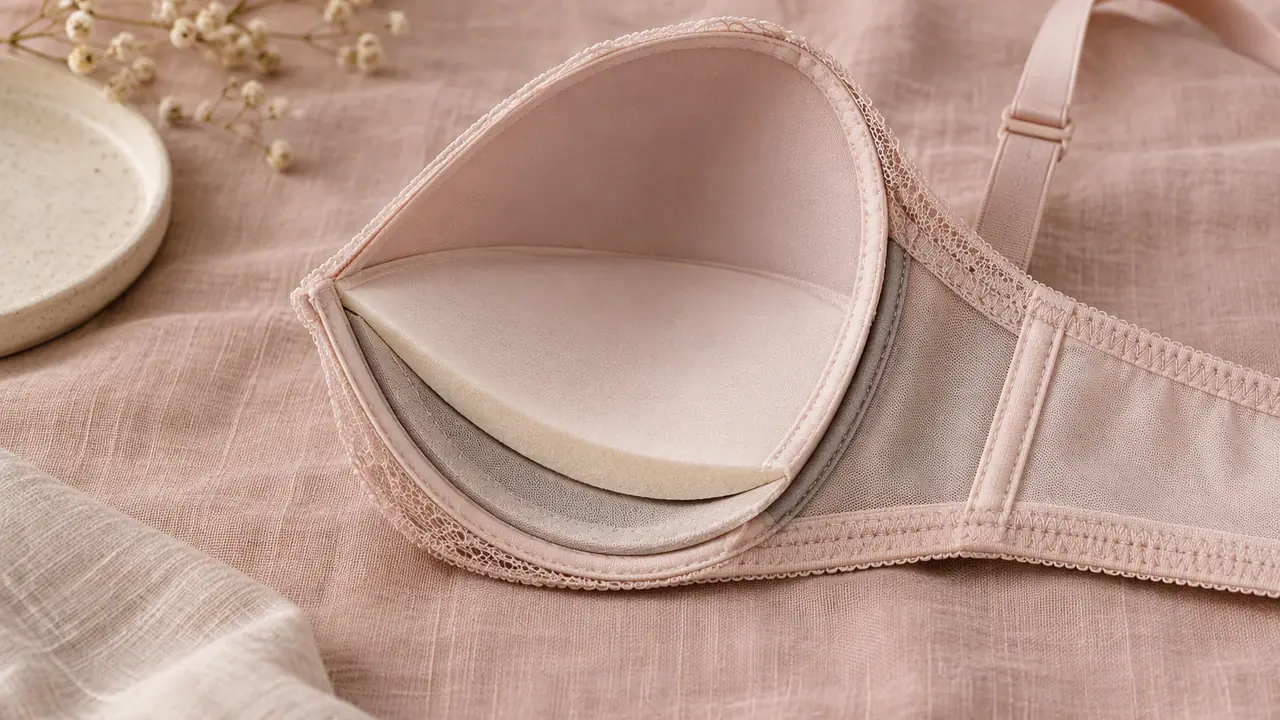
Two systems control movement. Compression holds tissue against the chest with elastic fabric tension; it is simplest in construction, lightest in component count and works best at the smaller cup sizes. Encapsulation supports each breast in a shaped, often seamed or molded cup with separation between them, closer to a structured bra in pattern logic, and scales to the fuller sizes. Many high-impact builds combine both - an encapsulating cup inside a compressive outer layer - which is why the note on compression versus encapsulation treats them as axes rather than as rivals.
The choice sizes the program. Compression-only patterns grade simply and sew quickly, which suits multi-color assortments and marketplace depth. Encapsulation needs cup tooling or seaming per size and raises the fit-review load, but it covers the A-H ladder credibly. Plants that run both will often quote a hybrid for the fuller half of the ladder and compression for the smaller half, splitting one program along a size breakpoint rather than choosing one system for all.
| Level | Typical activity framing | Common construction | Spec weight |
|---|---|---|---|
| Low | Walking, yoga, everyday motion | Compression pullover, light band, racer back | Fabric stretch and recovery |
| Medium | Cycling, gym training, classes | Compression or hybrid, adjustable straps | Band depth, strap geometry |
| High | Running, training, court sports | Encapsulation or hybrid, molded or seamed cups | Cup structure, closures, full ladder testing |
How each level is built
Low-impact builds are close to a sports-style bralette: a compression pullover with a light band and fixed straps, where fabric does nearly all the work. Medium builds add band depth, wider straps and often adjustability, because load control starts to need geometry rather than tension alone. High builds are the structured end: encapsulating or hybrid cups, a firm underband with closures - the row-count logic in the note on hook and eye closures applies - plus engineered straps whose attachment points are reinforced, the subject of the note on strap construction. Racer backs, J-hooks and adjustable hardware all appear at this level as fit tools, not decorations.
Across all levels, the closure and band decide anchoring, and the cups decide control. A high-impact bra with a soft band transfers load to the straps and fails the wear test within minutes; a firm band with shallow cups controls the band line but not the tissue. The two reviews run together at sampling, at the smallest and largest sizes of the ladder.
Fabrics and four-way stretch
Sports bras live on nylon and polyester jerseys blended with elastane, knitted for four-way stretch so the fabric moves with the body in both directions and recovers to spec. The elastane percentage is a load-bearing spec item - the note on elastane percentages explains how recovery changes across the range - and stretch recovery after repeated washing is the property that decides whether a compression build still performs in month three. Moisture management finishes and knit structures are the second fabric axis, and both are verifiable per test report rather than per claim.
Fabric substitutions are the hidden risk in sports programs. A mill change that keeps the hand feel can move the modulus enough to shift a medium build out of its level, so the desk locks fabric construction - knit, weight, elastane share, recovery values - in the spec sheet and treats substitutions as re-samples. Material grades are verified per certificate per lot, with OEKO-TEX Standard 100 as the baseline for skin-contact programs.
Testing and quality items
The test list for a sports program is longer than for everyday bras because the loads are higher and the fabrics are technical. Colorfastness to washing and to perspiration, shrinkage, pilling, stretch and recovery, and strap and band elongation are the standard items, agreed per order and evidenced per test report. Closure cycle testing matters at high impact, where hooks work harder; the note on testing and inspection describes how the desk assembles the checklist and reviews reports per lot. Wear testing remains the final gate: a movement sequence at the ladder extremes that mirrors the activity the level claims, documented the same way a fit session is.
Planning a sports program
- Define the activity and set the level from it, then ask which construction features deliver that level.
- Choose compression, encapsulation or a size-split hybrid based on the ladder you intend to cover - typically A to H.
- Lock fabric construction and elastane share in the spec, with recovery values, and treat substitutions as re-samples.
- Weight the test list toward stretch recovery, colorfastness and closure cycles, evidenced per lot.
- Sample at the ladder extremes with a movement sequence, not only at center sizes.
Quantities and timing follow the bra ranges: branded programs typically from 1,000-3,000 pieces per color, catalog models from 500-1,000, samples in 7-15 days for catalog models and 15-25 days branded, confirmed in writing per order. Because fabric development carries the program, the desk coordinates mill and sewing-plant quotes together through the quote form; reference tables sit on MOQ and lead time.