
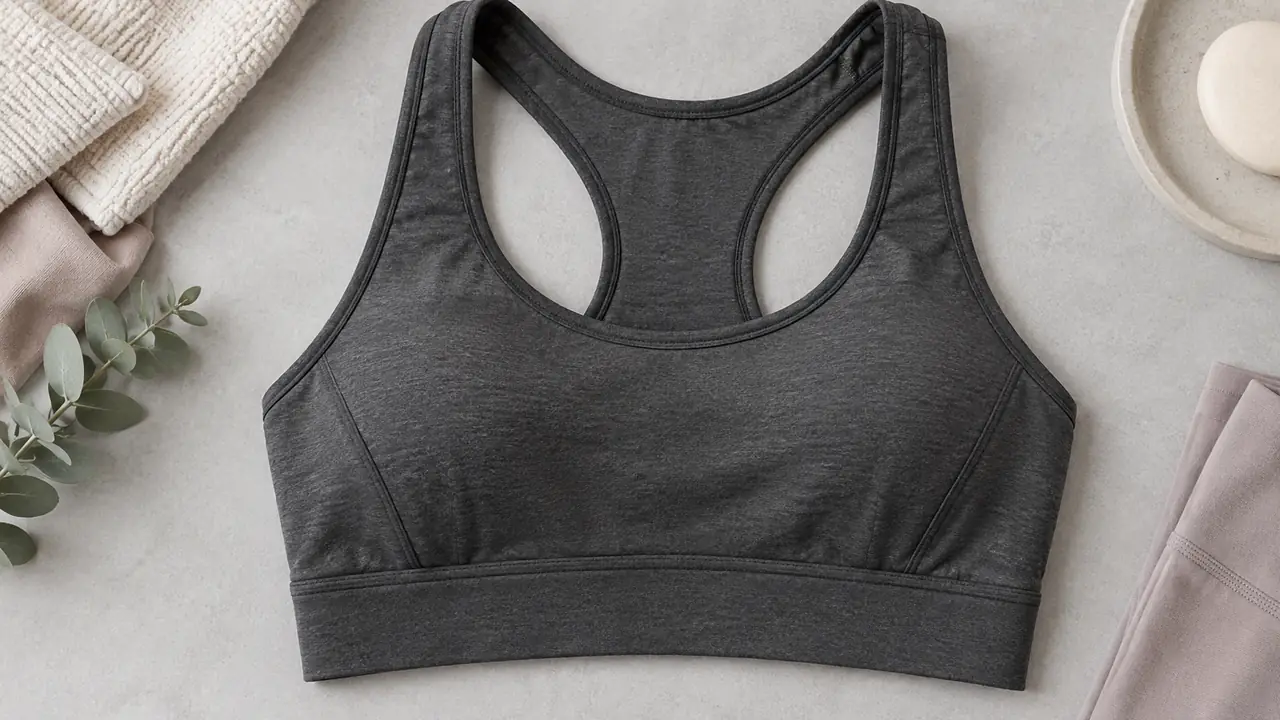
What a sports bra is
A sports bra is built around two construction families and an impact vocabulary. Compression styles hold the bust close to the body with a stretch shell; encapsulation styles hold each breast in its own shaped cup, closer to an everyday bra in structure. Impact grades - low, medium and high - are the planning language buyers and factories share, written per program with its test plan rather than claimed from a category default. Cup ranges run A to H and band ranges 30-44 as category references, with four-way stretch knits across the body.
For sourcing, the line is the most engineering-led of the six: seam placement decides comfort in motion, band tension decides hold, and fabric recovery decides how the garment behaves after repeated wash cycles. It is also the widest size run in the range, which makes grading discipline the main cost driver after fabric.
The six layers on the card
| Layer | What decides quality | Typical options |
|---|---|---|
| 1 Cups | Family (compression or encapsulation), seam layout, grading | Molded or cut-and-sew; A-H grading |
| 2 Band | Underband depth, closure type, tension stability | 30-44 band; hook closure or pullover; wide underband |
| 3 Straps | Layout, adjustability, hardware profile | Racerback, cross-back or parallel; fixed or front-adjust |
| 4 Wing and side | Seam technology, side panel height | Flatlock or bonded; higher side panel |
| 5 Fabric | Knit construction, elastane content, recovery | Nylon-elastane or polyester-elastane; four-way stretch |
| 6 Hardware and trims | Trim profile, labeling method | Coated sliders; printed or tagless labels |
Every layer above is confirmed on the program spec sheet; figures on this page are category references. The compression versus encapsulation post compares the two families in detail.
Choosing compression or encapsulation
Compression constructions are simpler to make and pack flat, which suits mid-impact programs and long size runs; the shell does the work, so cup grading stays shallower. Encapsulation constructions use separate cups on a bra-grade chassis with a wider band and firmer wing, which suits high-impact programs and fuller cup letters. Many ranges carry both families in one color story so the shelf reads as a single line. The desk shortlists plants by family: compression sits well with seamless-knit and cut-and-sew benches, while encapsulation needs bra-grade cup capability on the floor.
Impact levels and program planning
Low, medium and high describe the intended use case a program is engineered and tested for, fixed before sampling. A practical launch pattern is one low-impact style for studio and leisure, one medium for training and one high for running, sharing a fabric story but differing in band depth, strap layout and cup construction. Because the grade drives fabric weight, seam plan and cost, the desk advises brands to fix it per style at the start so sampling does not churn. The grade, its test plan and the pass criteria all live in the program sheet, not on a marketing page.
Certification, fabric and testing
The fabric story runs on nylon-elastane or polyester-elastane knits with four-way stretch, specified with elastane content and recovery figures on the sheet. OEKO-TEX Standard 100 applies per certificate per lot as across the range. United States programs add the Textile Fiber Products Identification Act, FTC care labeling and 16 CFR 1610. Order-agreed tests worth naming in the tech pack include colorfastness, shrinkage, pilling and stretch recovery - the last one is where a knit that felt right on first wear shows whether it keeps its hold. The testing and inspection page covers how test lists are agreed per order.
Options worth specifying
- Strap layout. Racerback for range of motion; parallel straps for everyday crossover use.
- Closure. Pullover for low impact; hook closure for high impact and fuller cups.
- Seam plan. Flatlock for movement comfort; bonded for a clean surface.
- Visibility. Reflective trim on straps or center front for low-light use.
- Packaging. Flat-fold poly for marketplace; retail box for premium lines; see packaging.
Where sports lines are made
Sports programs draw on two production bases at once: Shantou and Puning for encapsulation styles that use bra-grade cups and closures, and the seamless-knit base around Yiwu for compression and pullover families. Four-way stretch knitting quality varies more between mills than bra components do, so fabric mills are shortlisted separately and knits are booked with recovery figures on the lot certificate. The cluster page maps the split and the desk's selection logic.
Inspection before shipment
- Stretch and recovery on band and body panels after three cycles.
- Seam strength on flatlock and bonded joins at defined points.
- Cup symmetry and grading across the A-H run.
- Band tension consistency on sampled units.
- Colorfastness and shrinkage results against the order-agreed test list.
- Carton check: label set, care booklet and poly or box spec per the approved sheet.
The plan is confirmed before the first batch; see quality control. Reference quantities and timing sit on the MOQ and lead time page, and the quote form asks for the grade, size run and fabric direction up front.