
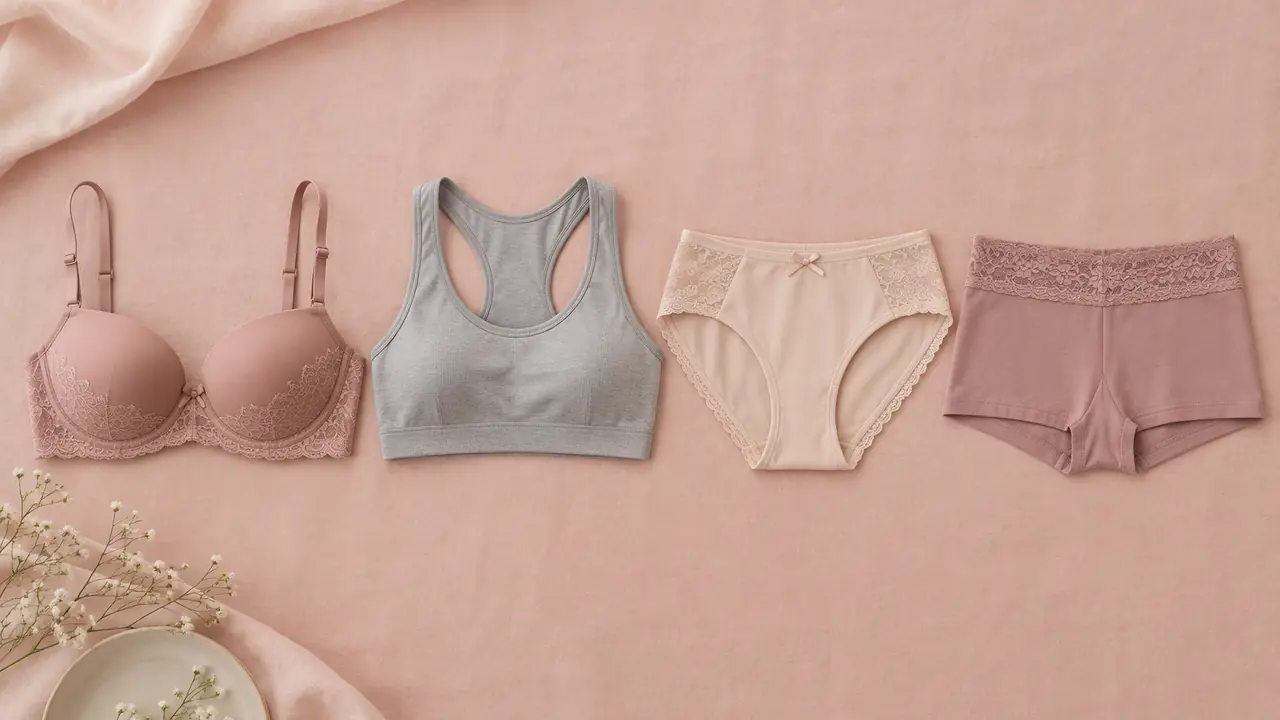
Rise and coverage: the two axes
Nearly every panty style can be located on two axes: how high the front panel rises on the torso, and how much of the rear it covers. Rise runs from low, sitting well below the navel, through mid, up to high, which reaches the natural waist. Coverage runs from a full rear panel through moderate cuts down to the minimal T-shaped rear of a thong. Fabric and edge finishing sit on top of these two decisions and decide how a style behaves in wear and in the wash.
For a buyer the two axes are more than vocabulary. They drive pattern complexity, grading range, elastic consumption and, ultimately, which plants can quote a program efficiently. A low-rise bikini and a high-waisted brief may share a fabric roll and a plant, but they do not share a pattern block, and their fit failure modes differ. Deciding the axes first keeps the rest of the specification coherent.
The five families at a glance
| Family | Rise | Rear coverage | Typical size range | Usual fabrics |
|---|---|---|---|---|
| Brief | High, mid or low | Full | XS-3XL | Cotton, modal, lace |
| Bikini | Low | Moderate | XS-3XL | Cotton, lace, mesh |
| Boyshorts | Mid | Full | XS-3XL | Cotton, modal, lace trim |
| Thong | Mid or low | Minimal, T-shaped | XS-2XL | Cotton gusset lining; seamless or lace body |
| Period | Mid or high | Full | XS-3XL | Layered absorbent core, leak-resistant per spec |
The ranges in the table are typical across the category and confirmed per spec sheet, never measured values. Each family also carries a different operational weight: a brief program graded XS-3XL across three rise options is a heavier pattern and grading effort than a single-rise thong graded XS-2XL. The panty styles guide walks the same five families from a specification angle, and the panty sizing note explains how waist and hip measurements map to the size letters.
How rise behaves in wear
High-rise styles sit at or above the navel and pair naturally with high-waisted outer garments, because the panty edge stays below the garment waistband. The trade is fabric: more body panel means more material per piece and a longer cutting lay. Mid-rise is the category default, sitting between the hip bone and the navel, and it tolerates the widest range of outer wear. Low-rise styles sit on the hip and depend on waistband engineering - a covered elastic or a bonded waist finish - to stay in place without digging.
Rise also interacts with body change across a size run. A waistband that sits at the natural waist in size S may sit noticeably lower in size 2XL unless the pattern grades the rise height as well as the girth. This is one of the quiet reasons identical styles fit differently across a range, and it is worth asking a plant how they grade rise before approving a size set.
How coverage decisions play out
Full rear coverage is brief and boyshorts territory: a complete panel over the seat, with the leg opening positioned so the panel stays in place when the wearer sits or moves. Moderate coverage - the bikini family - trims the rear panel and narrows the sides, usually to a side strip in the 5-8 cm range. Minimal coverage removes the rear panel in favor of a central strip, which is the thong solution to visible lines under close-fitting garments.
Coverage choices should follow the garment plan rather than instinct. A range built for close-fitting bottoms leans on thongs and bonded edges; a range built for everyday cotton basics leans on briefs and boyshorts; a fashion-leaning range mixes bikini and cheeky cuts with lace. Mixing coverage levels inside one program is normal, but every distinct rear pattern adds a block to grade, sample and fit-check, so the count should stay deliberate.
Coverage also interacts with fabric weight. A full-coverage rear panel in a heavier cotton rib carries its own edge and does not need help from elastics; the same coverage in a light modal jersey will rely on leg elastics and a well-drafted leg curve to keep the panel seated. When buyers change fabric after sampling, the leg opening is the first place the change shows up, which is why the desk asks for fabric decisions before fit approval rather than after.
Fabric and edge choices across styles
Fabric is the third axis that cuts across style. Cotton knits remain the everyday default and are the standard gusset lining across all five families. Modal brings a smoother hand and deeper dye depth, which is why it dominates solid dark colorways. Lace and mesh carry the fashion end, usually as trims over a functional base rather than as the whole garment. The cotton versus modal note compares the two fibers in detail, and the lace note covers stretch lace, rigid lace and durability behavior.
Whatever the shell fabric, the category standard for contact-safety documentation is OEKO-TEX Standard 100, held per certificate per lot by the producing plant. Buyers should treat the certificate as part of the specification rather than an afterthought, because marketplace and retail-chain documentation requests increasingly ask for it when a program is opened, not when goods ship.
Building a style ladder
- Fix the garment plan first: what the range will be worn under decides coverage before fabric is discussed.
- Choose a lead style - usually a mid-rise brief or a bikini - and a size range; XS-3XL is the common category span.
- Add one rise above and one below the lead style to form a ladder without multiplying patterns.
- Decide the fabric ladder: a cotton or modal core, then one lace-trim line if the channel calls for fashion.
- Confirm gusset construction and lining fiber for every style; a cotton-lined gusset is the category standard.
- Close with quantity per color, in-warehouse date and the documents each channel requires.
One practical note on sequencing: fit the lead style first and freeze its block, then derive the rest of the ladder from it. Programs that sample every style in parallel against a fresh block for each tend to end up with five garments that share a label size but not a fit, which is expensive to discover after bulk cutting.
When the ladder is set, the quote form asks for exactly these decisions - lines, rise, size range, quantity per color - so the desk can match plants instead of guessing.