
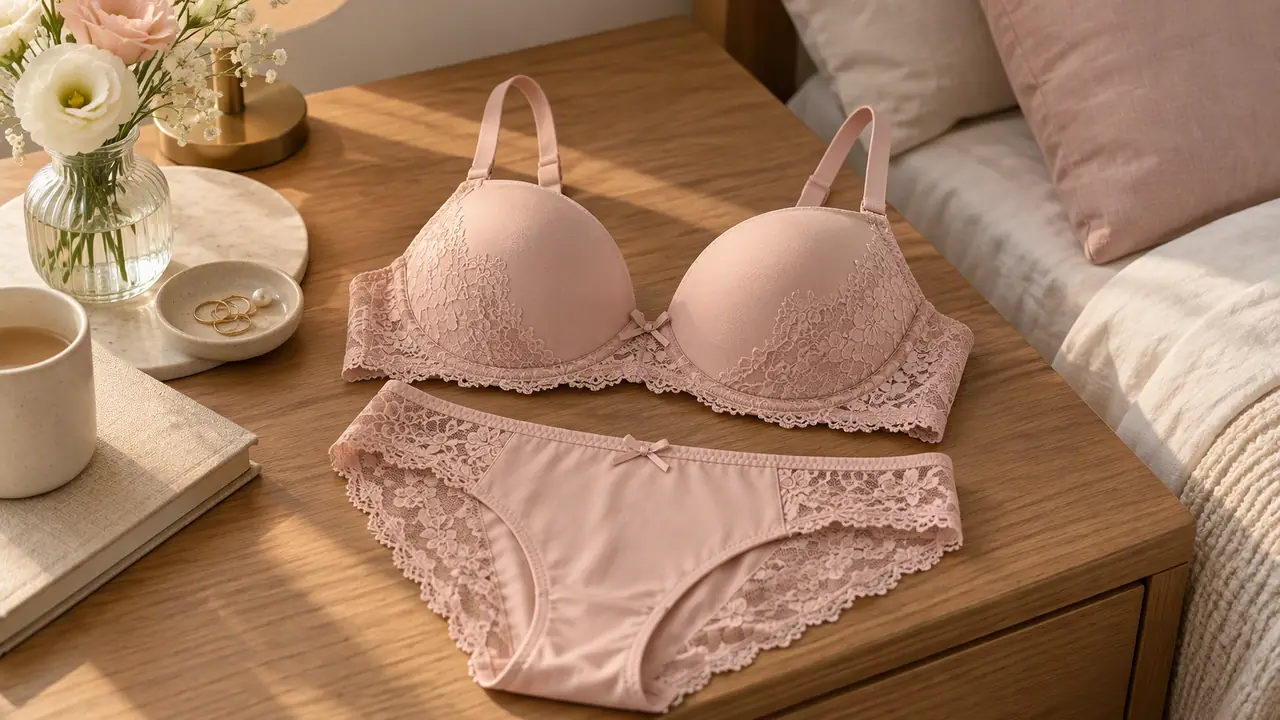
What seamless actually means
Seamless in intimate apparel means the garment, or its main panels, are knitted to shape on a machine rather than cut from fabric and sewn. The knit plan builds in the shaping - side shaping, cup depth, band depth - through stitch density changes, and most of the sewing operation disappears along with the cutting table. It does not mean zero stitching: knitted-to-shape garments still have assembly joins where tubes meet panels and finishing at edges, and bonded constructions are a separate route again. The term describes where the structure comes from - the knitting plan, not the sewing plan - and buyers who use it that way get accurate quotes.
Circular knitting: tubes with variable structure
Circular seamless machines knit a tube whose structure varies as it is knitted: density changes create the shaping, different structures place rib zones, mesh zones and hold zones within one piece, and elastane is fed selectively so hold appears where the build calls for it. Machine diameter is fixed per frame, which makes size a machine decision before it is a pattern decision - a smaller frame knits a smaller garment - so size ranges are planned around the diameter set the plant holds. Within one diameter, density shaping covers a fit range. This is why seamless programs quote differently from cut-and-sew: the plant is quoting machine time and diameter availability, not cutting and sewing minutes.
Warp knitting: flat sheets, lace and spacer
Warp knitting - the tricot and raschel families - produces flat sheets rather than tubes, and it owns three constructions intimates rely on. Tricot fabrics are the smooth, run-resistant sheets behind many linings and panty bodies. Raschel machines knit the lace families, from simple bands to multi-bar patterned laces - the lace side is covered in lace types for intimates. And spacer fabrics - two face knits held apart by a connecting pile - give a three-dimensional, air-permeable sheet used in cups, pads and comfort builds. A seamless-range plan usually combines the two worlds: circular tubes for bodies, warp-knit sheets for lace and components.
Sizing and grading on seamless
Grading logic differs from cut-and-sew. A cut-and-sew program grades patterns across a size run; a circular program adds machine diameters, with density shaping covering the range inside each diameter. The practical consequences reach the program plan: size runs are confirmed against the plant's diameter set before sampling, fit sessions run at the diameter breakpoints rather than only at the ladder ends, and a size extension can mean a machine decision rather than a pattern adjustment. The desk checks the diameter plan against the size grid at quotation for exactly this reason, because a quoted program that cannot cover the size run is not a quote - it is a negotiation that has not started yet.
Finishing: dye and setting
Knitted-to-shape garments are dyed as garments and heat set to fix their shape, and finishing carries the program's tolerance the way cutting carries it in cut-and-sew. Shrinkage behavior is specified and verified after wash, because a seamless body that relaxes after laundering changes fit at every point at once. Hand-finishing choices - softening, edge finishing at the assembly joins - are agreed per program. The verification sequence mirrors other programs: washed samples at the diameter breakpoints, then inline checks during bulk, with the same attention to elastane recovery that a wired program gives its band elastic. Where a range runs both routes, seamless bodies and cut-and-sew structured styles are washed side by side in the same session, so the handoff between them reads consistently across the line.
The construction routes at a glance
| Route | How the shape is made | Typical placement | Watch-outs |
|---|---|---|---|
| Circular seamless | Knitted tube with density shaping | Bralettes, wireless bodies, panty bodies | Diameter set limits size planning; assembly joins remain |
| Warp knit (tricot and raschel) | Flat sheets, plain or patterned | Lace, linings, spacer components | Sheets still need cutting and joining into garments |
| Cut-and-sew | Patterns cut from fabric, sewn | Structured bras, wide size ranges | Seam plan and sewing capability define the read |
| Bonded | Cut pieces joined by adhesive or ultrasonics | Seam-free reads on cut styles | Bond durability through laundering |
Where seamless fits a range
Seamless earns its place where the garment's read benefits from fewer seams and the structure can come from the knit: bralettes, wireless bodies and panty bodies are the core, with sports-adjacent builds drawing on the same machinery for compression zones - a structure fact of the knit, not a performance promise. Structured wired programs remain cut-and-sew territory. The category pages show the split in practice: the wireless bra and bralette lines draw on seamless construction, while the wired lines stay assembled. Style-level construction on the panty side is set out in seamless panties, and the bralette side in bralettes.
Clusters and capability
Capability is regional. The Shantou area in Guangdong is known for bras and seamless construction, with a dense component and machine ecosystem around the cluster; Yiwu concentrates thermal and seamless categories alongside its multi-category base; Puning holds the largest overall industry scale - per the municipal government, above RMB 140 billion in textile and apparel output in 2025 - with a chain that runs from raw material through testing. The cluster view matters for seamless specifically because machine availability - diameters, gauges, yarn feed systems - is the capacity that books out first, and cluster density gives programs alternatives when a frame is committed. The desk's cluster notes sit on the industry clusters page.
What buyers should specify
Five lines cover a seamless program: the construction route per style, the size grid checked against the plant's diameter set, the structure plan - where density, rib, mesh and elastane feeds change within the body - the finishing specification with shrinkage verified after wash, and the test panel agreed before bulk. Reference quantities for panty programs run typically 2,000-5,000 pieces per color for OEM builds and 500-1,000 for catalog models, with ODM first orders longer - reference ranges confirmed in writing per order, with the current table on MOQ and lead time. The quote form carries the size grid so plants answer with the diameters they can actually run.