
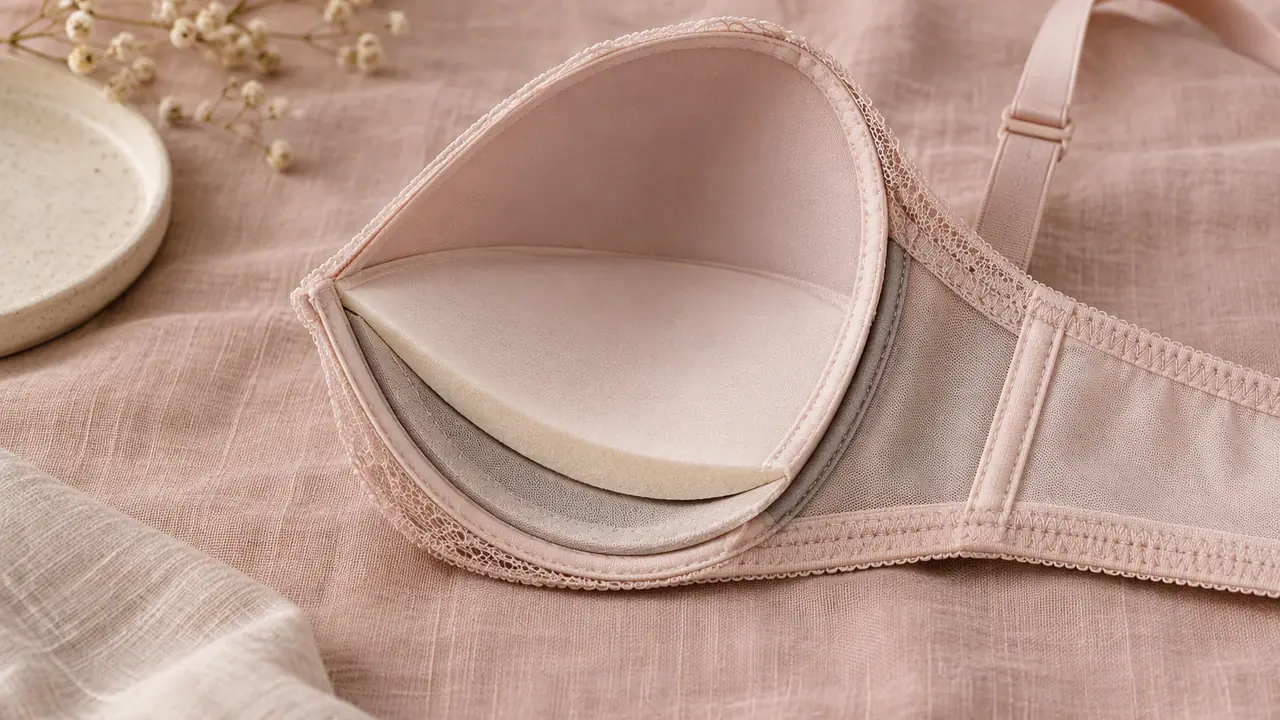
What defines a bralette
Three absences define the family: no underwire, no molded cup and no graduated padding. What remains is a soft-cup construction where stretch lace, rib knits, modal jerseys or cotton blends carry the load, shaped by a band that sits lower on the torso and by straps that are often fixed rather than adjustable. Cup coverage ranges from triangle fronts to sports-style pullovers, and sizing typically runs XS to 2XL as a letter-size ladder rather than the band-and-cup system used by structured bras - a smaller, simpler grade that is a large part of the family's production appeal.
The simplification is real but bounded. A bralette cannot lean on hardware to correct a fabric decision, so the fabric modulus, the elastic grade at the band and the strap attachment strength decide everything. Where a structured bra spreads risk across components, a bralette concentrates it in two or three materials, which is why fabric certificates and elastic tests matter proportionally more here than in any other bra family. The baseline the desk asks for is OEKO-TEX Standard 100 per certificate per lot on every skin-contact material.
The cut families
Three cuts cover most of the market. The triangle front is the classic silhouette: two soft cups meet at a center bridge, often finished in stretch lace, and it reads as the fashion-led option. The longline extends the band toward the ribcage or waist, adding fabric weight and a different garment-pairing story. The sports-style bralette is a pullover with a higher neckline and a racer or cross back, closer to light activewear in construction though not graded for impact levels. Each cut changes the pattern risk profile, as the table shows.
| Cut | Construction | Fabric partners | Program note |
|---|---|---|---|
| Triangle | Two soft cups, center bridge, low band | Stretch lace, rib knit, modal jersey | Fashion-led, seasonal colors and lace choices |
| Longline | Extended band, more body fabric | Modal, cotton blends, heavier rib | Higher fabric cost share, fewer sizes per carton mix |
| Sports-style | Pullover, higher neck, racer back | Nylon-elastane jerseys, brushed knits | Closer to activewear sourcing, four-way stretch fabrics |
Fabrics: lace, modal, cotton and blends
Stretch lace is the signature bralette fabric, and its quality splits into stretch recovery, pattern clarity and edge durability - the note on lace types walks the machinery and the durability differences. Modal brings drape and a smooth hand, and it is the common base for solid-color bralettes that sit under clothing; the note on modal fabric covers absorbency and care. Cotton blends anchor the basics end of the market with breathability and familiar labeling, covered in the note on cotton in intimates. Blends with elastane hold shape through wear and wash, and the elastane percentage is a spec item, not a detail - the note on elastane percentages explains how recovery shifts across the range.
Because a bralette has so few components, fabric substitutions move the product more than buyers expect. A heavier rib changes band behavior; a different lace stretch changes cup fit at the same letter size. The discipline that keeps programs comparable is to lock the fabric construction - knit, weight, stretch percentage - in the spec sheet and to treat any substitution as a re-sample, not a running change.
Sizing XS-2XL and fit logic
Letter sizing trades precision for simplicity. A single XS-2XL ladder cannot resolve the band-and-cup combinations a structured bra resolves, so bralette fit leans on stretch: the fabric spans the variation that cup sizing would otherwise absorb. That works within limits, and the limits are why fit reviews should include the ladder extremes, where the stretch range is widest. Straps fixed at a pattern position suit the small and center sizes and can read short or long at the ends of the ladder; adjustable straps add a component but extend the usable range.
Two fit checks carry most of the weight. The band check is the same two-finger test used on structured bras - the note on signs of a good fit lists it with the others. The cup check is edge seating: soft cups should meet the torso without gaping at the top edge or compressing at the side, and lace edges should sit flat rather than roll. Both checks belong in the sample review at the smallest and largest sizes, not only at the center size.
Care, durability and honest limits
Bralette lifespan is a fabric story. Stretch lace loses recovery faster than a woven elastic, rib knits pill where packs rub, and delicate edges snag in the wash - the note on bra lifespan sets the care expectations buyers should mirror in their own care labeling, which in turn follows the FTC Care Labeling Rule for the US market. Colorfastness and pilling are the two test items that decide whether a fashion color survives the season, and both are order-agreed test items in the desk's standard checklist.
Honest limits also sell. A bralette is a low-structure style; it is not a sports bra, and listing it with impact-level language invites returns. The merchandising story that works is construction truth: wire-free, fabric-led, sized simply, certified per lot. The same honesty carries into listings - the note on listing content shows how construction facts answer the questions buyers actually ask.
Planning a bralette program
- Choose the cut family and the fabric story together - lace reads fashion, rib and modal read basics, pullovers read casual.
- Lock fabric construction in the spec: knit, weight, stretch and recovery, with certificates per lot.
- Set the XS-2XL ladder and sample both extremes, since stretch does the sizing work.
- Decide strap hardware early - fixed for simplicity, adjustable for range extension.
- Plan colors as fashion capsules with repeat orders, because bralette cycles are shorter than structured-bra cycles.
Quantities for bra programs apply here too: branded orders typically from 1,000-3,000 pieces per color and catalog models from 500-1,000, with samples in 7-15 days for catalog models and 15-25 days branded, confirmed in writing per order. Because bralettes are fabric-led, the desk coordinates fabric sourcing and garment sewing in one plan; the quote form carries the fabric spec so lace mills and sewing plants quote the same material. Reference tables sit on MOQ and lead time.