
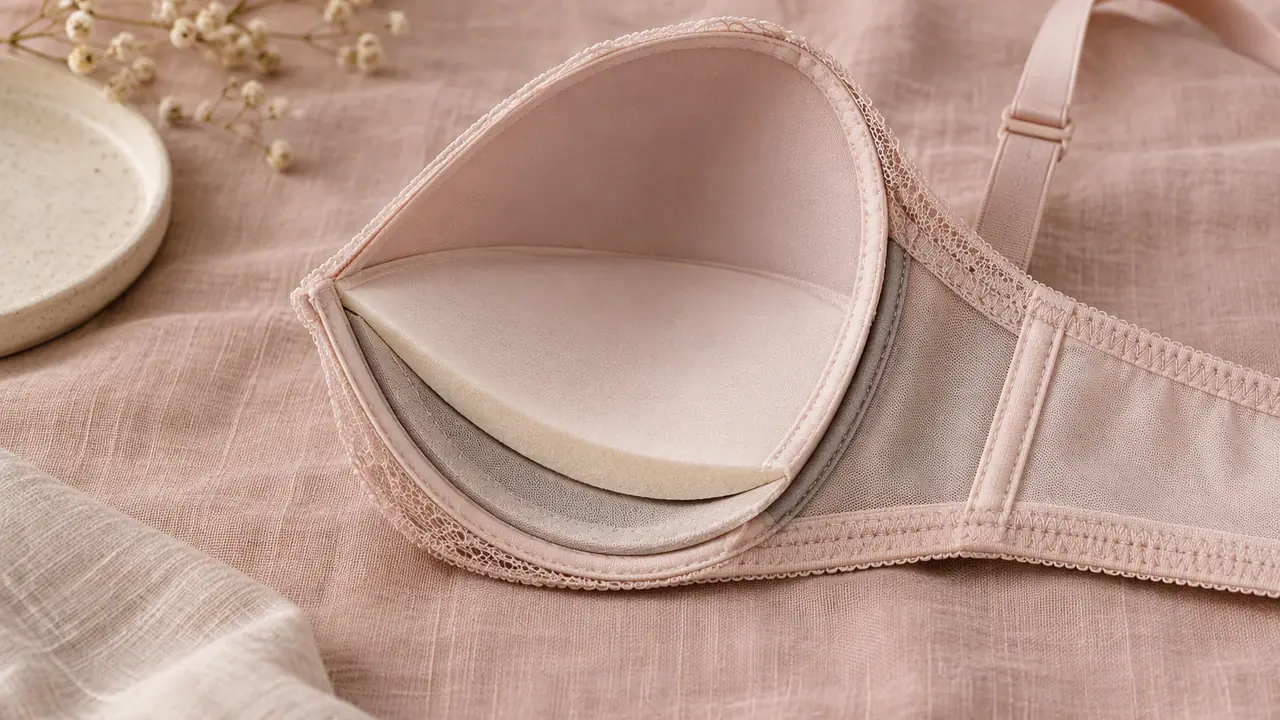
Two constructions, one load path
Every bra solves the same engineering problem: anchor a frame to the torso and control soft tissue within it. An underwired bra anchors through the band and shapes through a wire sewn into channeling that follows the inframammary fold - the crease where the breast meets the chest wall. A wireless bra anchors through the band as well, but replaces the wire with fabric structure: a deeper band, a wider and firmer wing, internal slings at the sides and a molded or layered cup that holds its geometry without hardware. Neither construction is automatically more supportive; each fails in its own way when the engineering is thin.
For a buyer, the comparison is not comfort against support but one cost and capability profile against another. Wireless styles have a simpler component set and no wire sourcing, but they lean harder on fabric quality and pattern work. Underwired styles demand wire-to-cup matching across every size and a plant with channeling discipline, but they achieve projection and separation with less fabric. The note on underwire types and sizing details the wired side of the comparison.
How wireless support is engineered
A wireless bra earns its support from four levers. The band is deeper and firmer than a strapped style's, often with a shaped or split band that rises under the cups. The wing extends further forward and uses compression fabric to control the side. Internal slings - panels of low-stretch fabric between cup and wing - carry the tissue from below and the side. And the cup itself is constructed to hold shape: molded foam, double-layer fabric with directional stretch, or a seamed three-panel build. Remove any one lever and the others have to compensate, which is why wireless patterns are less tolerant of fabric substitution than they look.
Size range follows the same pattern as the category: wireless styles commonly run A to DD+ cups on 32 to 44 bands, typical across the category and confirmed per program. At the top of the ladder the levers multiply - band depth, sling panels, cup layers all step up - so plants grade wireless programs in sub-ladders just as they do strapless. The note on band tightness explains why the band check is the first fit test on any wireless sample.
How underwired support is engineered
The underwire is a precision component, not an accessory. Its gauge, curvature and diameter are specified per cup size, and the wire must match the cup's bottom seam radius: a mismatch sends wire tips into the channeling fabric and eventually through it, which is the most common wired-bra warranty claim, covered in the note on underwire poking through. The cradle - the small band panel beneath each cup - holds the wire flat against the torso, and channeling width is chosen so the wire cannot rotate in wear.
In exchange for that precision, the wired construction buys projection and separation with less fabric than a wireless equivalent, and it grades cleanly: wire tables per size are a solved problem across the industry. The costs are component sourcing, channeling sewing quality and a fit profile that some wearers avoid. Full-coverage, balconette and plunge styles all exist in wired form, and the family note on bra types maps where each sits.
| Dimension | Wireless | Underwired |
|---|---|---|
| Load path | Band, wing, slings, cup fabric | Band plus wire along the fold |
| Typical sizes | A-DD+ cups, 32-44 bands | Broad, graded by wire table per size |
| Component set | Simpler, no wire or channeling | Wire sourcing, channeling, cradle |
| Main failure mode | Fabric fatigue, band ride-up | Wire poking, cup-wire mismatch |
| Fabric dependency | High - modulus drives support | Moderate - hardware shares the load |
| Program risk | Pattern and fabric changes shift fit | Sewing quality at channeling ends |
Comfort, wear tests and honest trade-offs
Comfort is measurable. Band pressure, strap tension and fabric breathability all show up in a structured wear test, and the two constructions fail differently: an underwired style fails where the wire meets tissue at the fold, a wireless style fails where the band has lost recovery after laundering. Elastic recovery is therefore the test item to weight heaviest in a wireless program - the note on elastic losing stretch describes the timeline and causes. In a wired program, weight the channeling ends and the cradle seam instead.
Neither construction needs a hard claim to sell. The structural facts - wire-free, soft support, four-way stretch on one side; wire table, cradle and channeling on the other - carry the merchandising story, and they are the same facts a plant needs to quote. Avoid the temptation to let marketing language substitute for specification: the sample either passes the wear sequence or it does not.
Cost drivers and quoting
The two constructions quote differently, which matters when comparing offers across plants. In a wireless quote, fabric weight and elastic grade move the number most, because they are the support system; a cheaper fabric substitution quietly degrades fit even when the sample looks identical. In a wired quote, the wire set, channeling and cradle sewing sit alongside fabric, and mold tooling enters if the cups are molded. Ask each plant to break the quote into fabric, components and sewing, so a substitution in one line is visible instead of hidden in a blended price.
Also compare like with like on the ladder. A quote that stops at a D cup is not comparable to one that grades to DD+, because the top sizes carry more structure and more reject risk. The desk normalizes quotes across partner plants on ladder, fabric weight and component list before presenting them, and the note on what drives intimates costs walks the full cost stack from fiber to label for buyers who want the detail.
Which construction for which range
Channel logic favors wireless for DTC launches and comfort-led assortments: the component set is simpler, fabric stories differentiate, and the audience overlap with bralettes makes line architecture easy. Underwired fits core everyday assortments, retail chains and distributors who need proven ladders across many sizes, and any style where projection matters to the garment pairing. Many mature ranges carry both - a wired balconette as the anchor and a wireless molded style as the comfort alternative in the same color story, sharing fabric and trims to hold the certification scope together.
Quantities and timing are the same family for both: branded programs typically from 1,000-3,000 pieces per color, catalog models from 500-1,000, samples in 7-15 days for catalog models and 15-25 days branded, all confirmed in writing per order. The desk shortlists plants per construction - the capabilities differ - and the quote form carries the construction choice so the right plants see the brief. Reference tables sit on MOQ and lead time.