
What a chain asks that a brand does not
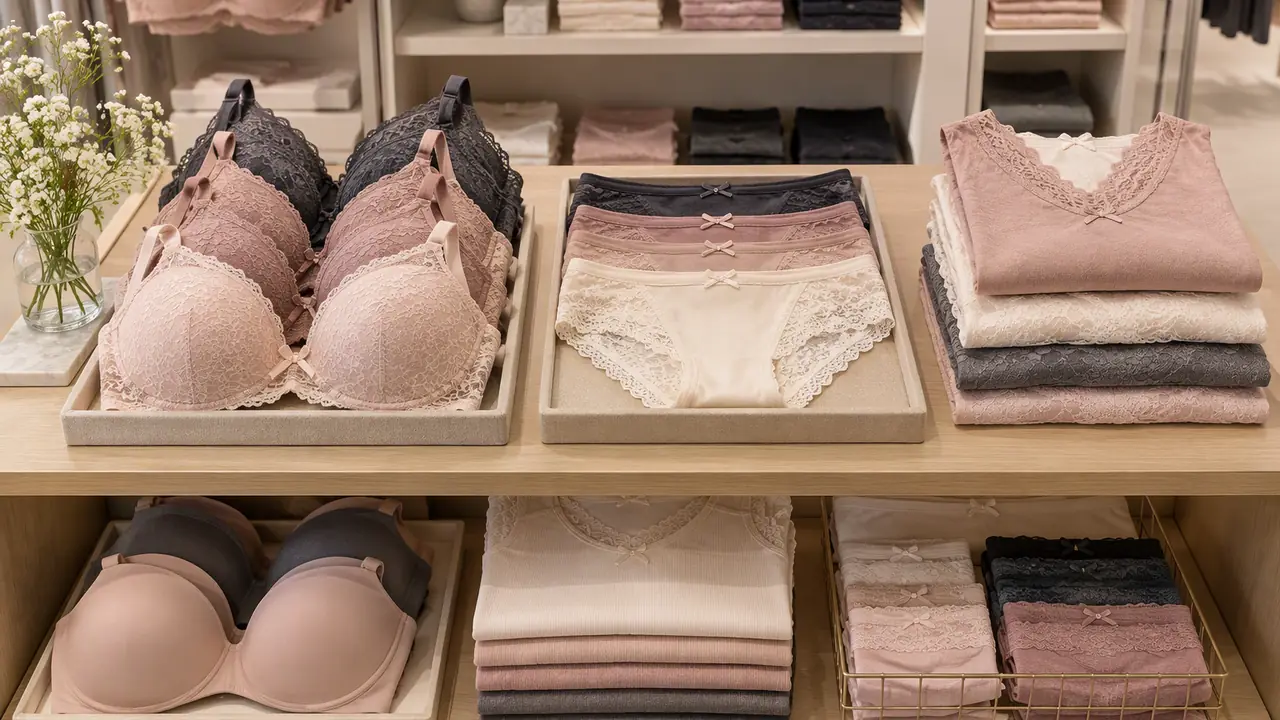
A brand answers to a collection; a chain answers to a planogram. The differences reach into every sourcing decision. Packs must face the same way on hundreds of shelves, so the package - not the hangtag - carries the size story. Size runs must arrive complete per store, not per warehouse, so cartons are planned store by store. And the compliance desk at the chain office reads files before buyers read samples, so the certificate pack must be assembled before the first purchase order, not after. The desk coordinates the brief, bikini and wireless bra lines into that format as a standing program rather than a one-off order.
Shelf packaging that survives handling
Shelf packs are handled by stock teams, squeezed by neighbors and judged from three meters away. The formats that survive:
| Shelf format | Where it fits | Notes |
|---|---|---|
| Printed box | Peg or shelf bays where the pack is the display | Size block readable at distance; artwork locked per season |
| Printed poly with board insert | Segregated underwear walls | Stiff insert keeps the fold square; lighter freight than a box |
| Open fold with belly band | Touch-and-feel displays on bras | Limited to fabrics that tolerate handling; size on band and shelf tag |
Whichever format a chain chooses, the pack is specified per line and mocked up on pilot units, because a fold that squares in a sample can slouch in a carton of five hundred.
The private label book
The private label book is the chain's rulebook for its own name: logo placements, hangtag and label hierarchy, care booklet wording, carton marking, and the artwork calendar that keeps a seasonal refresh from drifting off-grid. The desk maintains the book as a document per program, so a batch ordered in a different quarter still ships in the chain's language. Branding mechanics - woven labels, printed band logos, heat transfers - follow the OEM and private label page; packaging formats follow the packaging and retail boxes page.
Compliance before rollout
Chain compliance desks ask early and in writing. The file the desk assembles per program: OEKO-TEX Standard 100 certificate per lot for fabric safety; fiber content and origin labeling per the Textile Fiber Products Identification Act; care labeling per the FTC Care Labeling Rule; flammability under 16 CFR 1610; CPSIA where a children's line is planned; REACH screening where European doors are involved. Certificates are held by the partner plants, never by the desk, and verified per project before shipment. The compliance and certifications page lists the route market by market.
Pilot stores, then scale
- Format decision: lines, shelf pack, size run per store profile, and the private label book baseline.
- Samples against the color standard; pack mockups on pilot units, reviewed with the planogram in hand.
- Pilot store set: cartons planned per store, not per warehouse, so every door opens complete.
- Pilot read: sell-through by size band and pack format, returned as evidence for the scale decision.
- Chain-wide batches at 35-50 days private label, with the compliance file updated per lot.
Reference quantities sit on the MOQ and lead time page: 1,000-3,000 pieces per color on bras and 2,000-5,000 on panties as typical ranges, confirmed in writing per program.
Replenishment across seasons
Chain programs live on continuity: the core colors repeat while the seasonal faces rotate, and the planogram only changes when the evidence supports it. The same color standards, grade file and inspection plan carry across seasons, so a size bought in autumn fits the same in spring. Where the chain also sells online, the shelf pack gains a parcel-safe variant of the same artwork rather than a second design - one brand voice, two formats. Reorder triggers are tied to the sea freight window, and the desk holds retained references per approved batch so the pack a shopper meets in a third season still matches the first.
To open a chain program, the quote form takes the format decision first; lines and artwork can follow in the scope reply.