
The design goal, stated precisely
The minimizer brief is a garment-pairing goal: outer shirts and button-fronts read smoother when the bust line presents less forward projection. The construction answers with redistribution rather than compression - fuller cups that hold the whole breast, wires that follow a wider footprint, and side panels that carry tissue toward the cup center so the profile lowers without pressure points. That distinction matters for buyers because it predicts the component list: a construction that redistributes needs more fabric and more structure per size, not less, and it grades with the complexity of a full-coverage program rather than a light-lined one.
The goal also sets the audience. Minimizer programs skew toward the fuller end of the ladder, where fit discipline earns repeat purchases, and toward retail chains and distributors who serve that demand with core assortments. Search demand in the broader category is deep - the head term bra runs at roughly 90,500 US searches per month per Semrush keyword data - and the minimizer segment within it is steady rather than fashion-driven, which suits buyers who want stable ladders over seasonal churn.
The construction levers
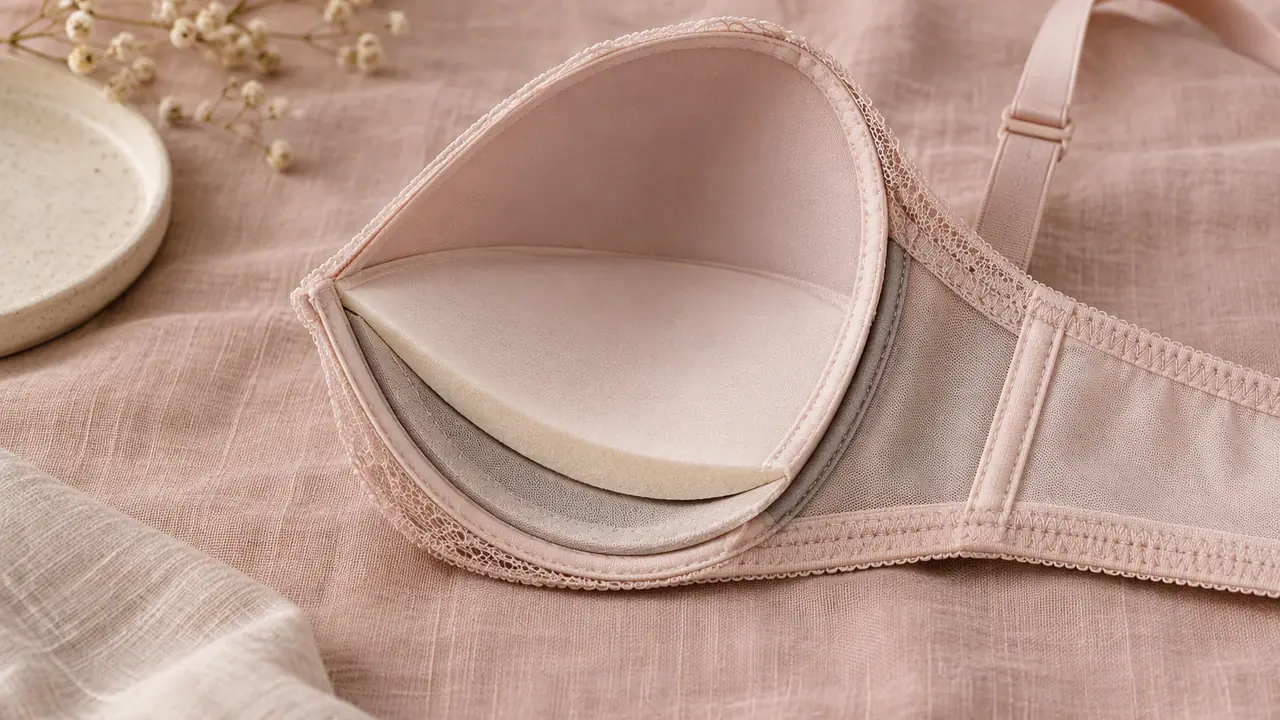
Four levers deliver the brief. Cup coverage runs to full or near-full, because a partial cup cannot redistribute what it does not hold. The wire footprint widens, following the breast root further toward the side, which spreads load and moves the projected line inward. Side support panels - internal slings or seamed side sections - carry tissue from the wing toward the cup center. And the band deepens, because redistribution raises the torque the band must anchor. Each lever adds structure, and the family reads as full-coverage engineering with a direction added.
Strap geometry follows. Wider straps set slightly closer than a balconette's, carrying more of the vertical load that deeper cups generate, with reinforcements at attachment points - the attachment methods in the note on strap construction apply directly. Closures run more rows at the deeper sizes for the same reason, per the logic in the note on hook and eye closures. The result is a quiet program: no fashion hardware, no seasonal fabrics, just component decisions that stack into support.
| Component | Minimizer build | Full-coverage everyday | Why it differs |
|---|---|---|---|
| Cup | Full or near-full, often seamed | Full coverage, molded or seamed | Redistribution needs shaped panels |
| Wire | Wider footprint, side-biased curvature | Standard footprint per size | Moves the projected line inward |
| Side panels | Slings or seamed side sections | Simple wing join | Carries tissue toward cup center |
| Band | Deeper, more closure rows | Standard depth | Anchors higher torque from cups |
| Straps | Wider, closer set, reinforced | Standard width and set | Carries load from deeper cups |
Seamed cups and why they dominate here
Molded cups dominate everyday programs because they are fast and smooth, but redistribution is a seamed-cup skill. A two-panel or three-panel cup shapes volume deliberately - the side panel angle is a pattern decision that decides where tissue sits - and the note on bra construction anatomy walks the panel logic. That is why minimizer programs sit with plants that keep cut-and-sew cup lines running, and why pattern changes are treated as engineering changes with a fit round attached rather than as running updates.
The seam trade-off is garment show-through: seamed cups can read through thin shirts, which is partly why the family pairs with structured outerwear rather than with jersey. Programs that need a smoother reading use molded full-coverage cups with internal slings instead, accepting a less precise redistribution for a cleaner surface. State the choice per style in the program brief; it changes the plant list and the tooling lead.
Fit checks specific to the family
Fit reviews follow the standard sequence - band tension, cup seating, wire tracking the breast root, strap load - but the family adds two checks. First, the side panel must control tissue at the wing join without pressing a visible edge through the outer garment; that edge is the most common comfort complaint at the larger sizes. Second, the reduced profile must hold through movement, not only standing: arms raised, seated and leaning forward, at the smallest and largest sizes of the ladder. The general checks are listed in the note on signs of a good fit, and the band logic in the note on band tightness.
Sizing runs at the fuller end: bands commonly from the mid-30s up and cups from C upward, typical across the category and confirmed per program against the plant ladder. Because the construction is dense, the reject and fit-failure risk concentrates at the ladder extremes, so samples at both ends belong in every review round, and the note on plus-size bras covers the support engineering at the top of the ladder.
Channel fit and merchandising
The family fits three channel patterns. Retail chains carry minimizers as core replenishment, where ladder depth and fit consistency matter more than seasonal stories. Distributors use the segment to deepen assortments at the fuller sizes, where many brands stop at a D cup. DTC brands enter through fit-content marketing - the construction facts in this note are exactly the listing content that converts - and hold customers with repeat sizes rather than repeat silhouettes. Marketplace sellers should weigh the segment's higher fit-expectation load against its lower return-ambiguity: buyers who find a minimizer that fits repurchase it, and buyers who do not return it with specific complaints, which is diagnostic rather than random.
Merchandising should stay quiet. Neutral colors, smooth finishes and construction claims traceable to spec are the language of the segment; fashion capsules dilute it. The note on color range planning describes the core-plus-seasonal structure most ranges follow, and the minimizer family sits almost entirely in the core.
Specifying a minimizer program
- Define the ladder first - bands, cups and breakpoints - since component density concentrates risk at the extremes.
- Choose seamed redistribution or molded-with-slings per style, and match the plant list to that choice.
- Specify wires per size with side-biased curvature, verified against the cup pattern at sampling.
- Weight the checklist at wing joins, side slings and closure rows, the three points that carry the load.
- Run a movement-sequence fit review at both ladder ends before bulk release.
Quantities and timing follow the bra ranges: branded programs typically from 1,000-3,000 pieces per color, catalog models from 500-1,000, samples in 7-15 days for catalog models and 15-25 days branded, confirmed in writing per order. The desk shortlists plants with active cut-and-sew cup lines for this family and coordinates the quote round through the quote form; reference tables sit on MOQ and lead time.