
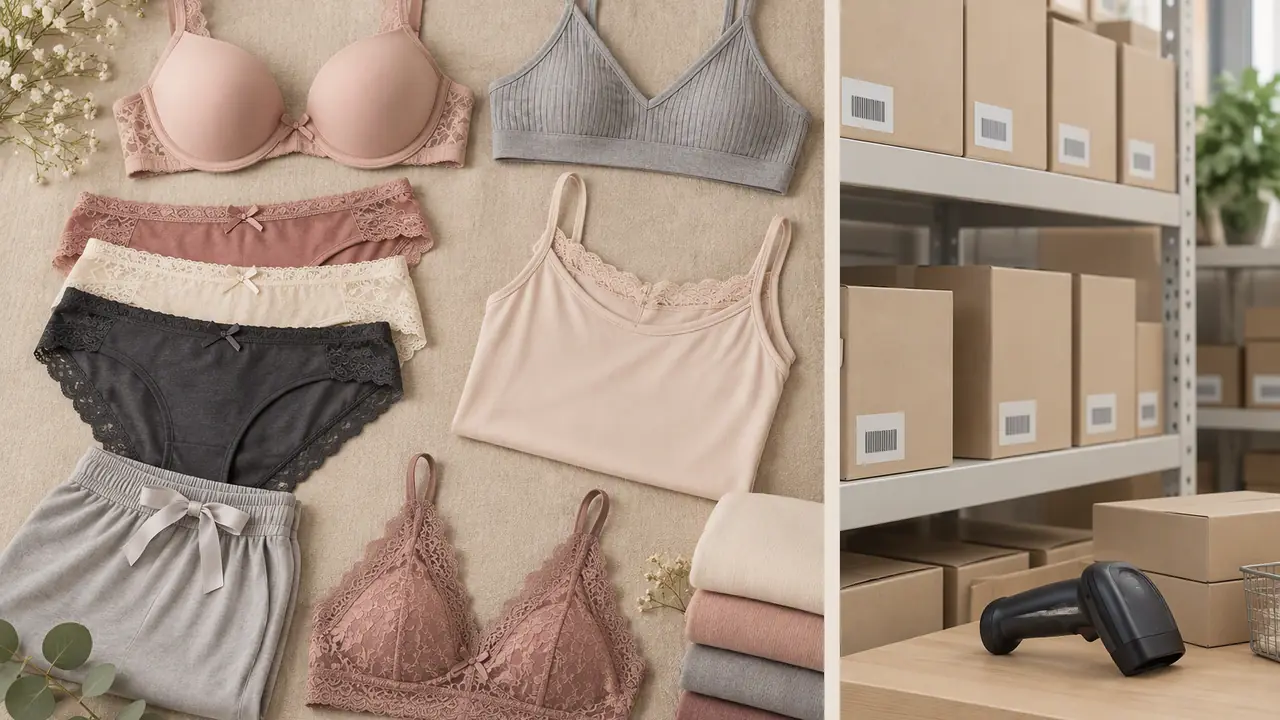
Start with one style family
One family means one construction logic, one grading challenge and one plant conversation. For a DTC everyday brand, the natural first family is wireless bras or bralettes, where construction is simpler and fit risk is lower than in wired styles. For a marketplace seller, the brief family - briefs, bikinis, boyshorts - offers the lowest per-style complexity and the fastest path to a multi-pack catalog. For a brand with a defined occasion, a balconette in two or three shades is the classic opening because the style is broadly wearable and well tooled across the clusters. The choice should follow the channel and the audience the brand already knows, not the style the founder personally wears; the brand owner page maps styles to audiences. The note on one line versus multi-line argues the same point at range level, and the comparison in private label versus white label frames how much of the design the brand should own in round one.
Decide the size range before the design
Grading is the least reversible decision in the program. It fixes which plants can serve the brand, how many size-set samples the fit process needs, and how much inventory each colorway splits into. Across the category, bra lines typically run band sizes from the low 30s to the low 40s with cup runs from A to DD and beyond depending on the plant; panty lines grade from XS to 3XL at the reference ranges. A first program does not need the full ladder. A band run of six to eight sizes with three or four cups covers most of a first audience and keeps the size matrix legible. What matters is that the range is chosen on purpose, written into the specification, and carried into the inventory plan - a range added later multiplies every colorway retroactively. The mechanics sit on the sizing and fit page, and the note on sizing and grading for production shows what wide ranges demand from a plant.
The first-program numbers to hold
The reference ranges below frame a first program. Every figure is a category-typical range, confirmed in writing for the specific program, never a quote.
| Item | Typical reference range |
|---|---|
| Branded bra MOQ | 1,000-3,000 pieces per color |
| Stock public-mold MOQ | 500-1,000 pieces per color |
| Panty MOQ | 2,000-5,000 pieces per color |
| Sampling lead | 7-35 days by sample type |
| Bulk lead | 30-45 days catalog model, 35-50 days branded |
| Ocean freight | 15-25 days US West, 30-45 days Europe |
Two readings of the table matter more than the numbers. First, minimums multiply per colorway, so the palette decision is a budget decision. Second, the calendar compounds: samples, revisions, bulk and freight stack into months, which is why the landing date belongs in the first brief. The full ranges sit on the MOQ and lead time page, and the note on how MOQ works explains the piece-color-size structure behind them.
A worked timeline shows how the ranges stack for a branded bra program. The specification and palette settle in week one. A branded sample follows at 15-25 days, one revision round lands about a month later, and the signed seal sample closes the fit phase around week nine or ten. Bulk then runs 35-50 days, putting finished goods at the plant around week seventeen, and ocean freight of 15-25 days lands the program in the fifth month. A stock public-mold program with an approved catalog style compresses the front half - its samples run 7-15 days - which is why it remains the recommended first move for founders with a fixed launch date. The example is illustrative and assumes one revision round; every real timeline is confirmed per program in writing.
Compliance from day one
Compliance is cheaper to build in than to retrofit. A first line needs the label set - fiber content, origin and RN identification per the Textile Fiber Products Identification Act, care instructions per the FTC Care Labeling Rule - and an eye on 16 CFR 1610 for fabric flammability in general apparel. Certification paperwork follows the lot: OEKO-TEX Standard 100 per certificate, and GOTS or BCI documents where the materials story calls for them. None of this delays a first program when it is specified up front; all of it delays one when it is discovered at customs or at a retailer onboarding desk. The checklist in the note on certifications by market and the compliance route turn this into a pre-launch list rather than a scramble.
Where the effort actually goes
First-time founders tend to budget attention by visibility: logos, boxes, the palette. The desk watches three quieter lines instead. Fabric selection consumes the most calendar, because hand feel, stretch behavior and shade all have to agree before a sample is worth sewing. Fit iteration is second, and it is a feature of the category rather than a failure of the plant - a bra carries more fit decisions per square centimeter than almost any other garment. Packaging is third, and it rewards early decisions: the label set, the hygiene presentation and the retail box all have print and tooling lead times of their own, coordinated through the packaging route. Spend follows the same shape - fabric, grading depth and freight dominate a program, which is why minimums and the size matrix deserve the scrutiny they get above.
A first-line sequence
- Pick the channel and audience, then the one style family that serves them.
- Fix the size range and the colorway count in writing, against the reference minimums.
- Build the specification pack and run the sample loop to a signed seal sample.
- Agree the test scope and collect certificates per lot at booking.
- Book packaging, labeling and freight against the landing date, working backwards.
- Bring the whole brief to the quote form, or start from the note on sourcing from China and the sourcing process if the clusters are still unfamiliar.